
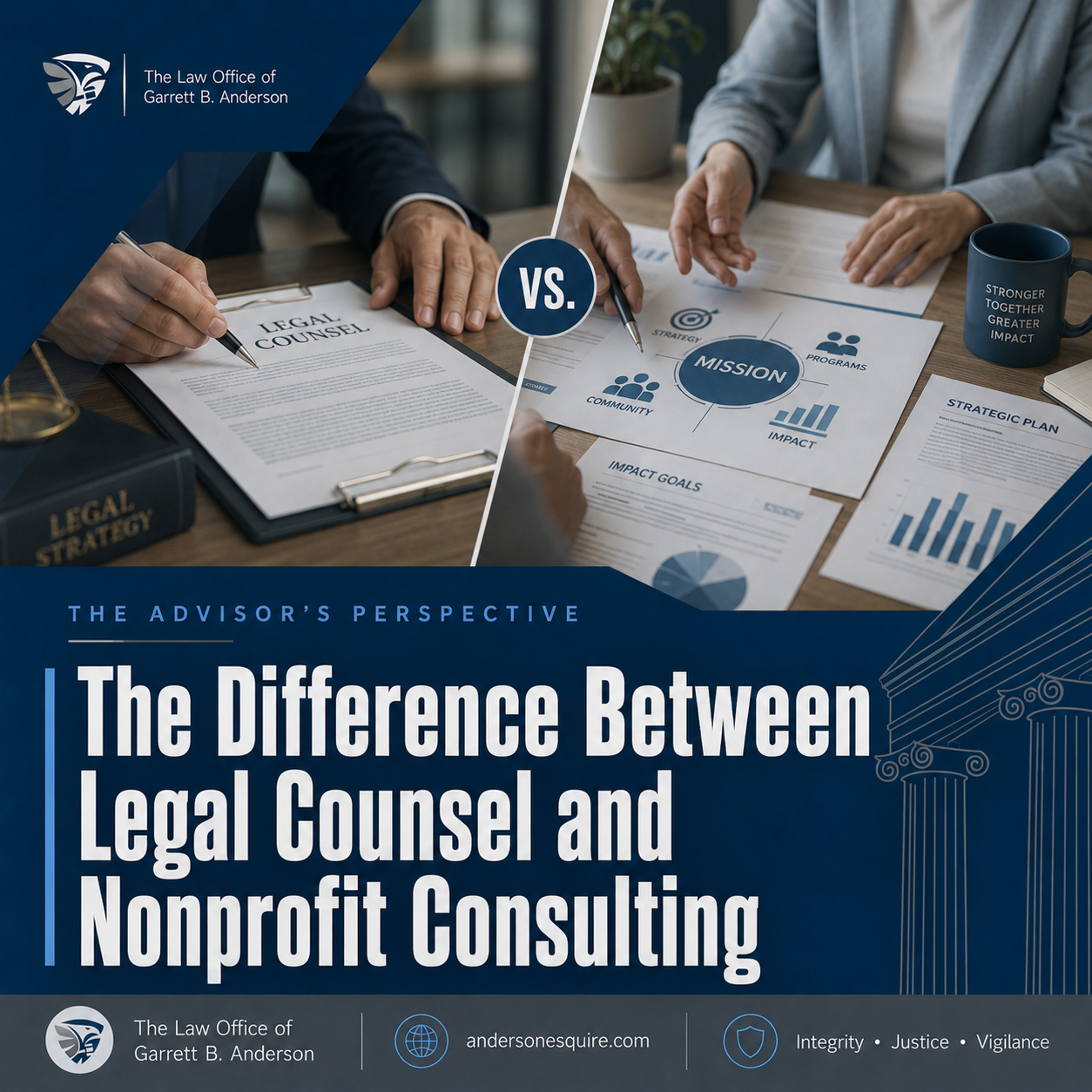
The Difference Between Legal Counsel and Nonprofit Consulting
Legal counsel and nonprofit consulting serve different purposes. Understanding the distinction helps mission-driven organizations get the right support at the right time.
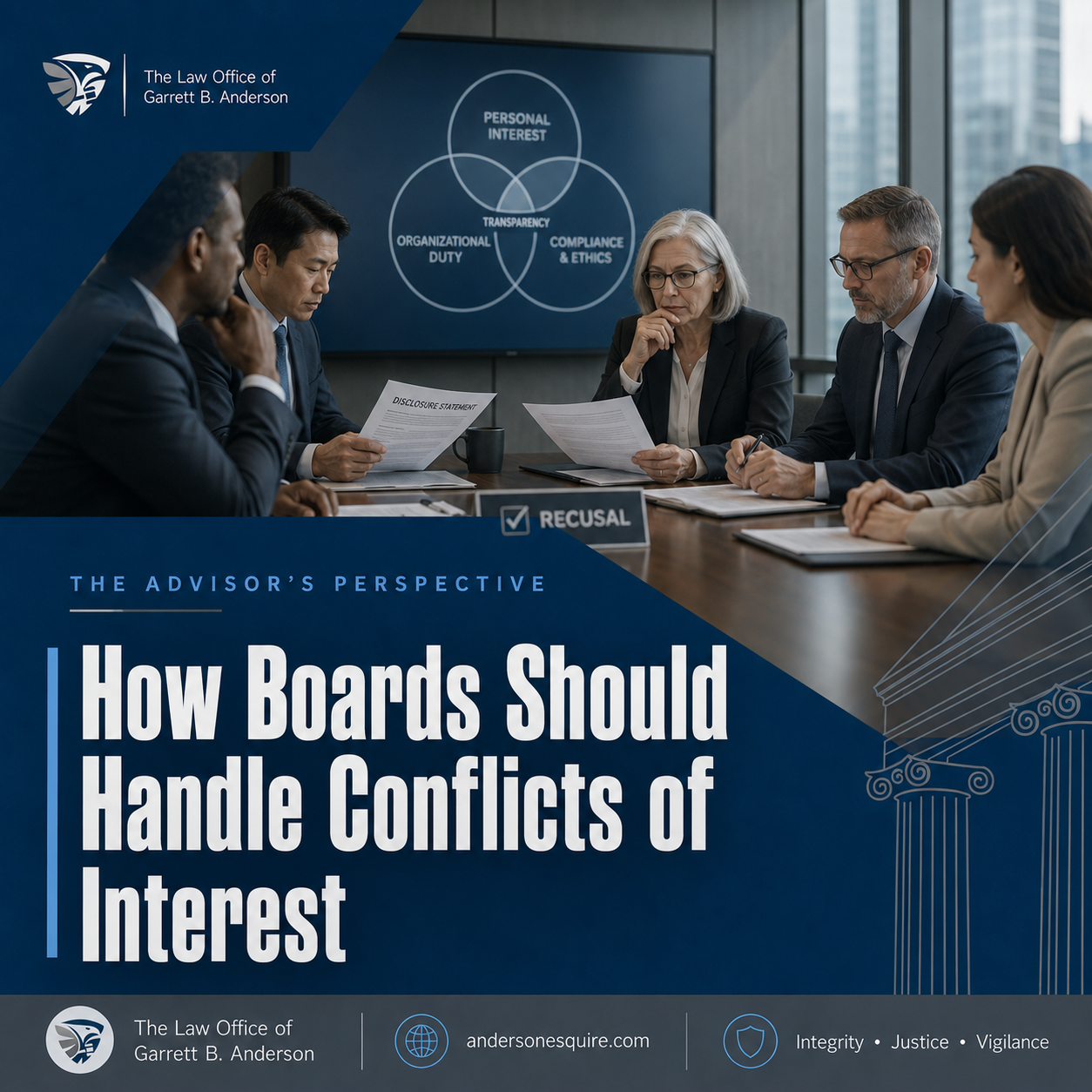
How Boards Should Handle Conflicts of Interest
Conflicts of interest are inevitable in nonprofit governance. What matters is how boards identify, disclose, and manage them before they become legal problems.
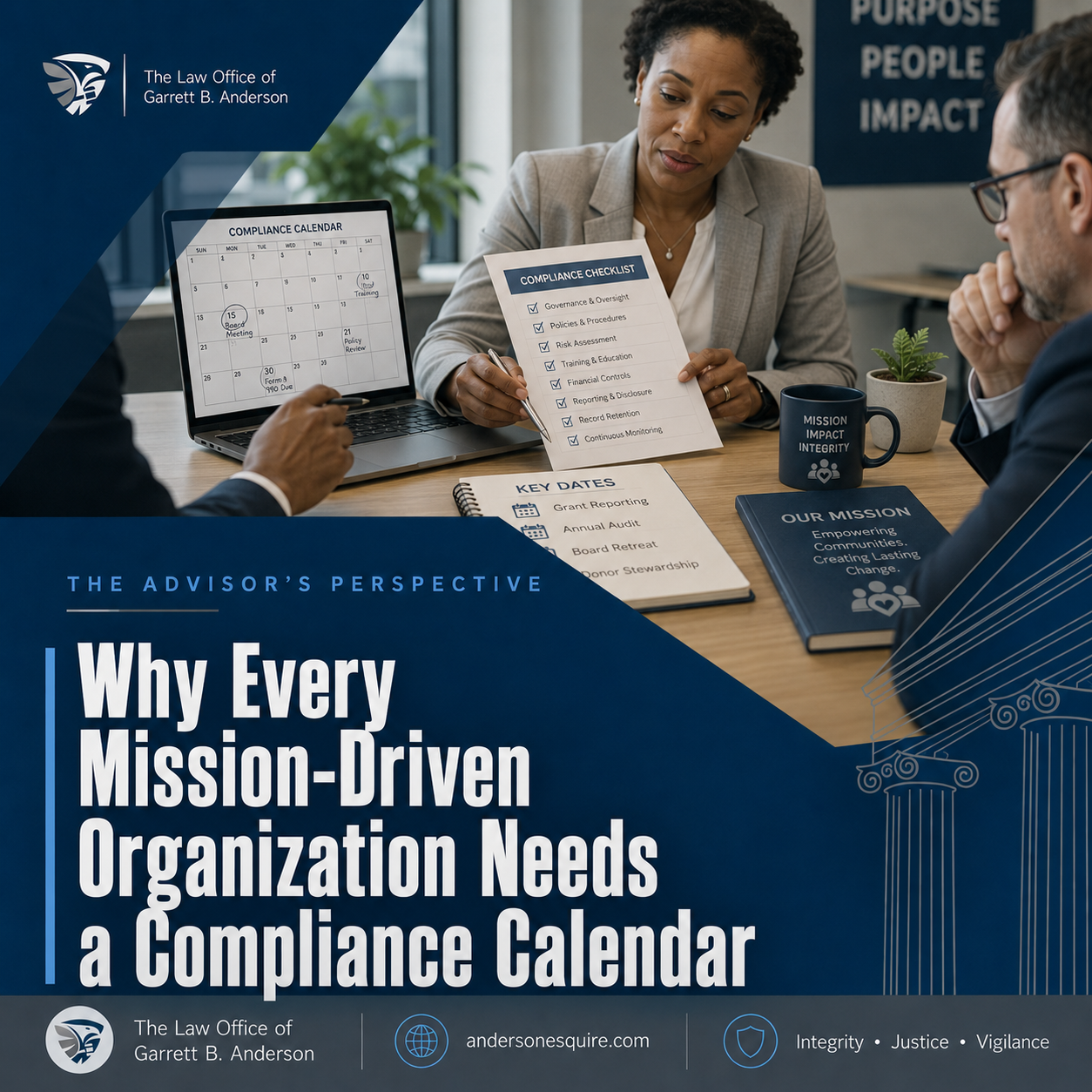
Why Every Mission-Driven Organization Needs a Compliance Calendar
A compliance calendar helps nonprofits track deadlines, filings, and policy obligations before they become violations. Here is why every organization needs one.

The Legal Difference Between Advice, Strategy, and Management
Understanding the distinction between legal advice, strategic counsel, and organizational management helps nonprofit leaders get the right support at the right time.
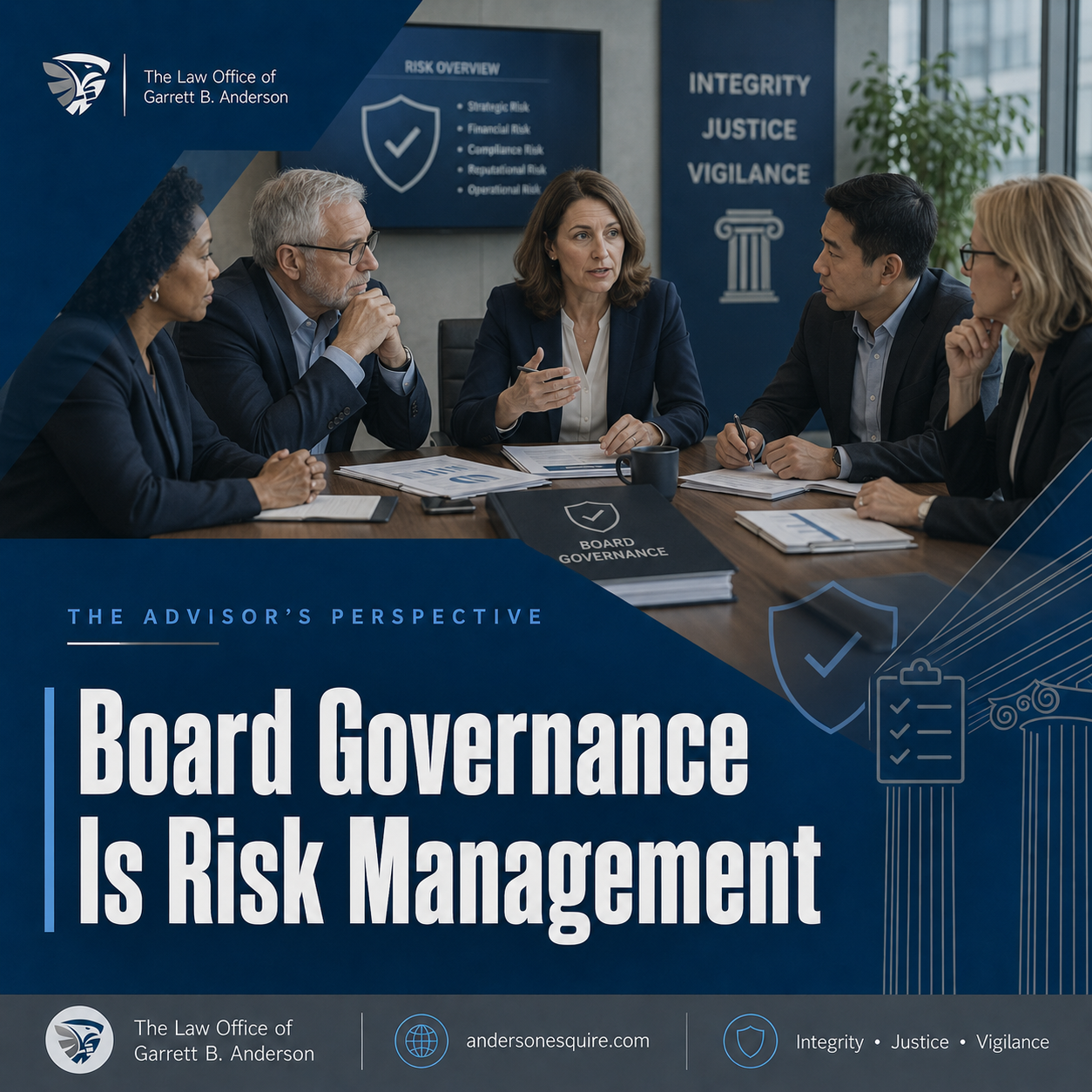
Board Governance Is Risk Management
Effective nonprofit board governance is one of the most important tools an organization has for managing legal, financial, and reputational risk.
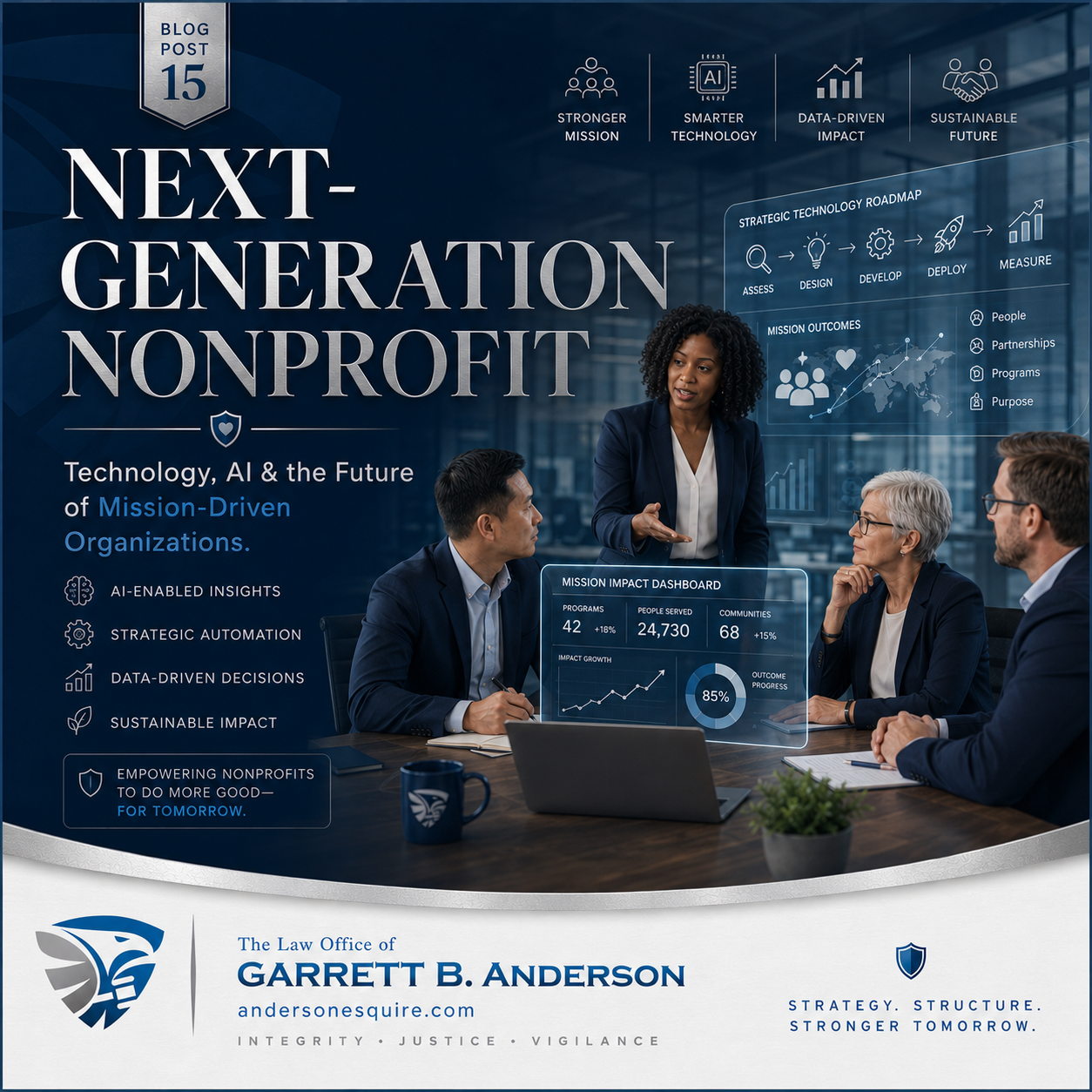
Building the Next-Generation Nonprofit: Technology, AI, and the Future of Mission-Driven Organizations
The organizations that will lead the next decade are building their operational capacity now, while others are still debating whether to adapt.
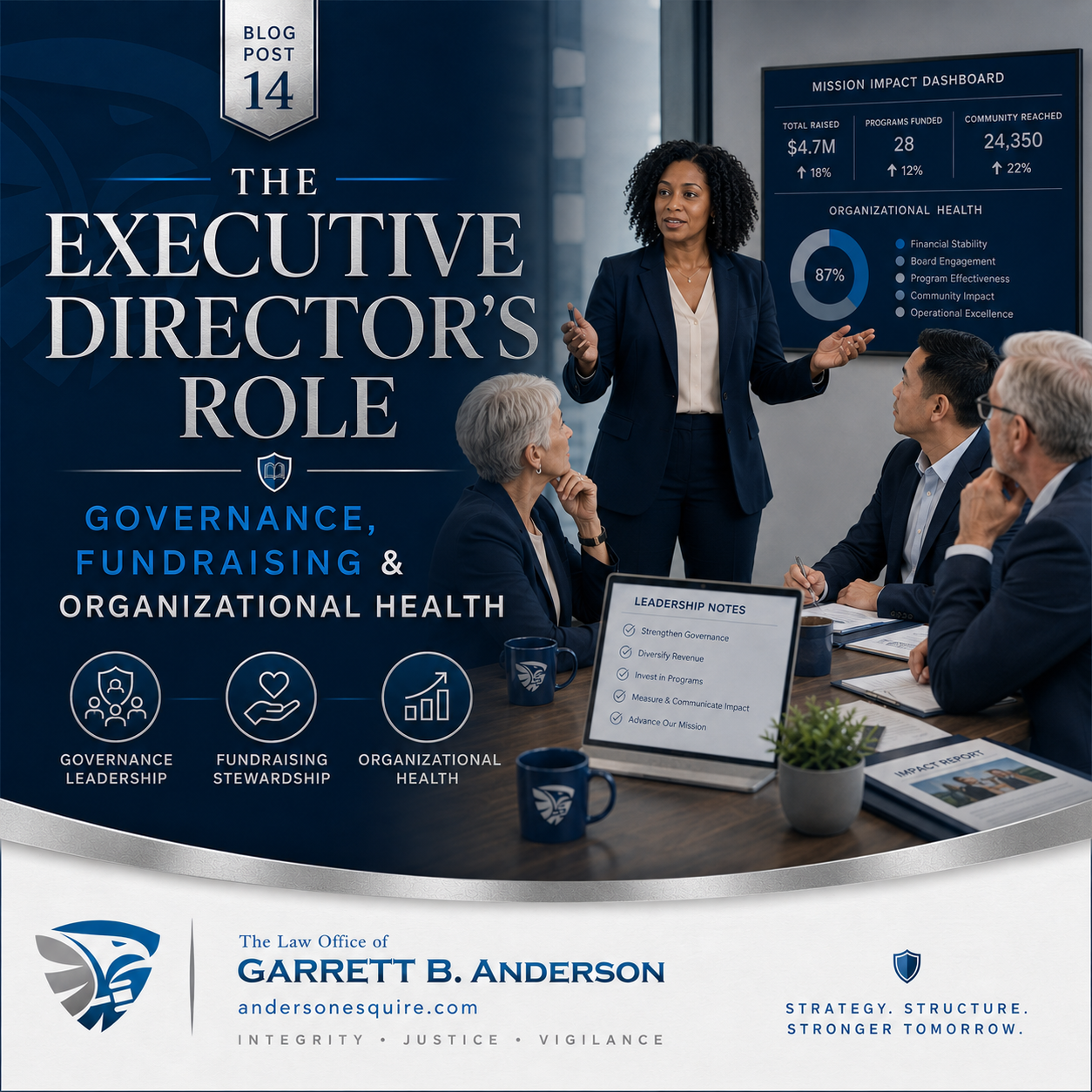
The Executive Director's Role in Governance, Fundraising, and Organizational Health
The executive director is not just the organization's leader. They are its single greatest point of institutional risk and opportunity.

When to Hire Outside Nonprofit Counsel or Consultants
The cost of not knowing when to bring in expertise is always higher than the cost of the expertise itself.

From Vision to Execution: Turning Community Impact into Measurable Outcomes
Funders do not fund feelings. They fund evidence. The organizations that close the gap between vision and data win.
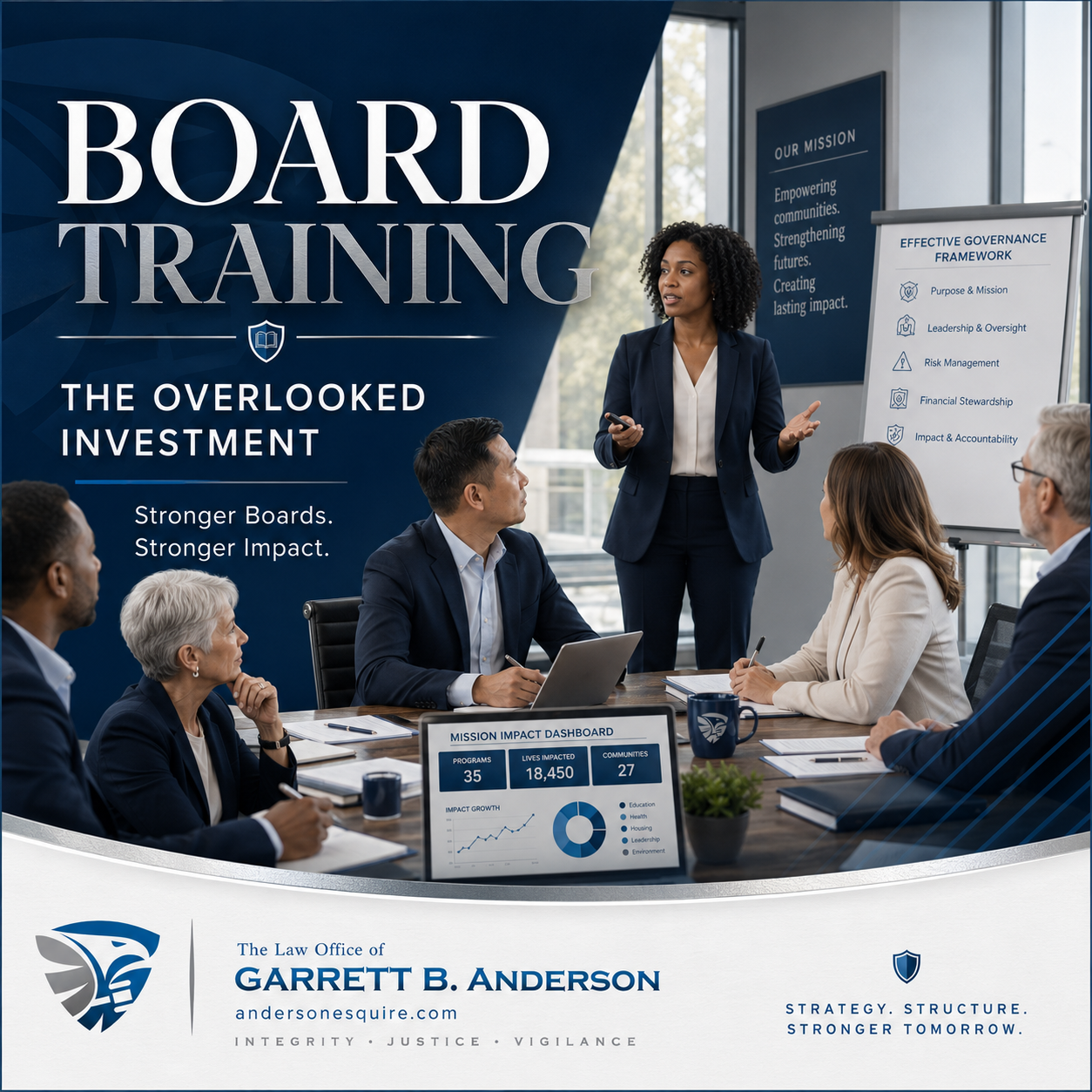
Board Training: The Most Overlooked Investment in Nonprofit Success
You cannot hold board members accountable for responsibilities you have never formally communicated to them.
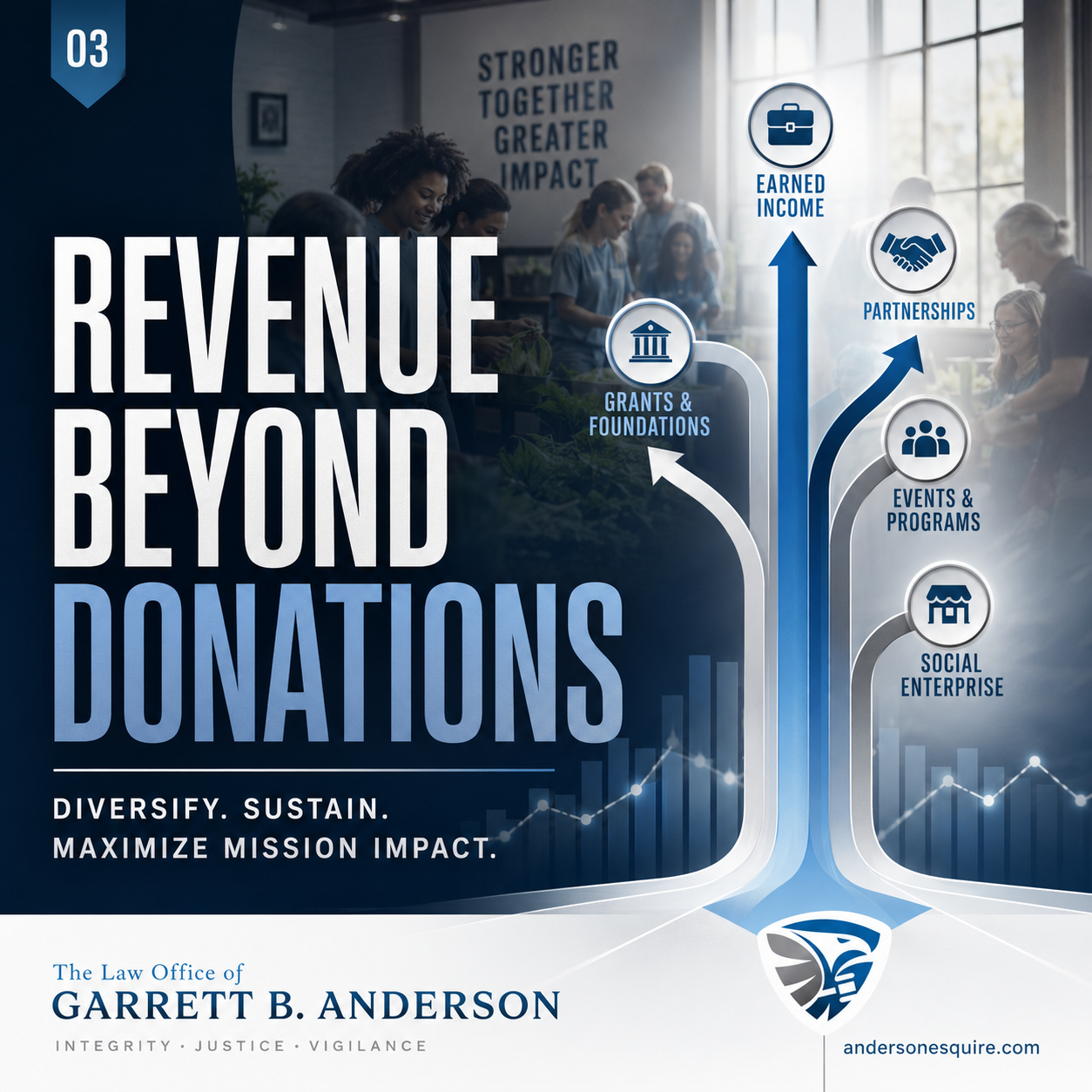
Building Sustainable Revenue Beyond Donations
The organizations built to last are the ones that did not wait for the next grant cycle to decide their financial future.
The Hidden Compliance Risks That Threaten Nonprofits
Most compliance failures do not arrive as scandals. They accumulate as oversights, until they become unmanageable.
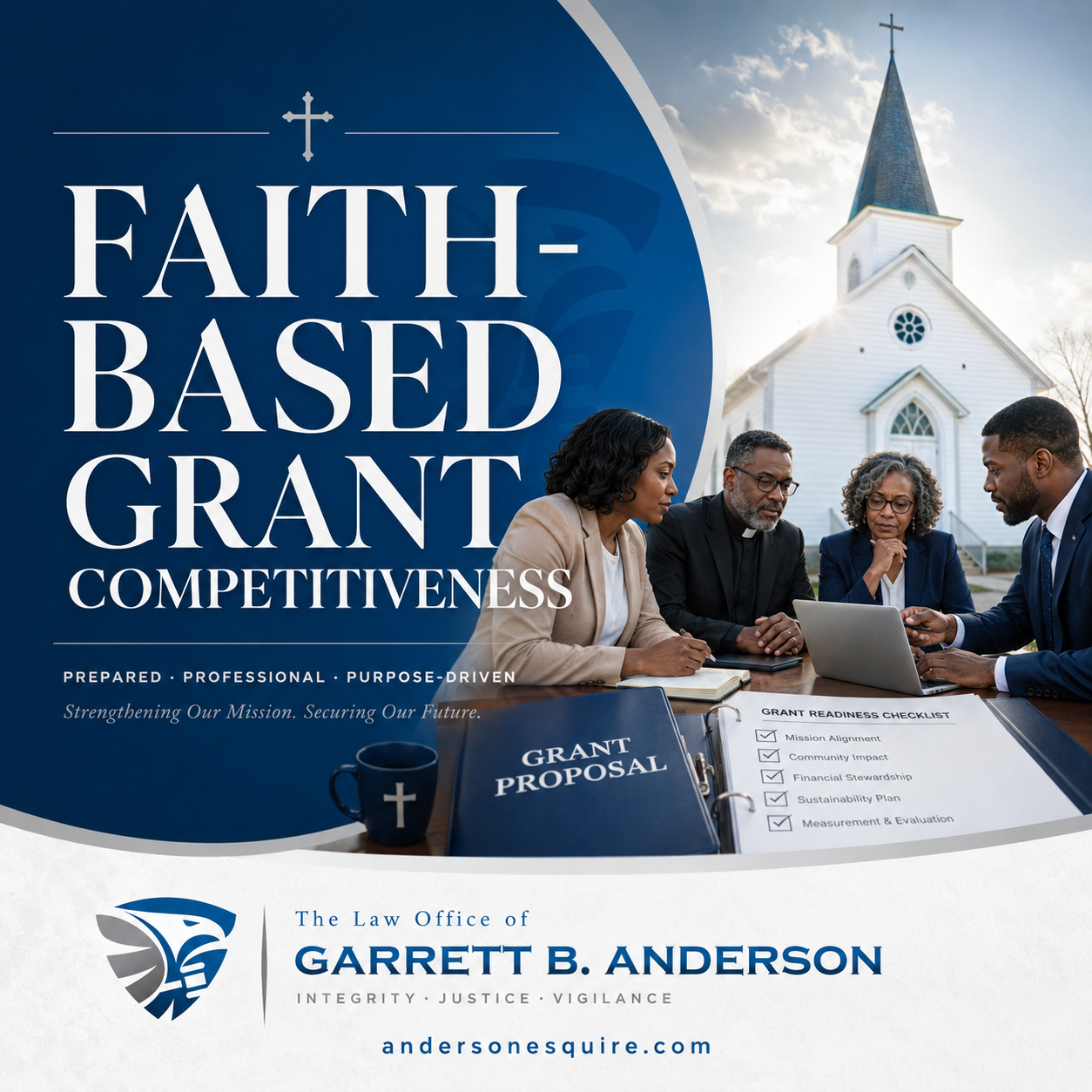
How Faith-Based Organizations Can Compete for Grant Funding
Religious identity is not a liability in the funding market. Underdeveloped infrastructure is.
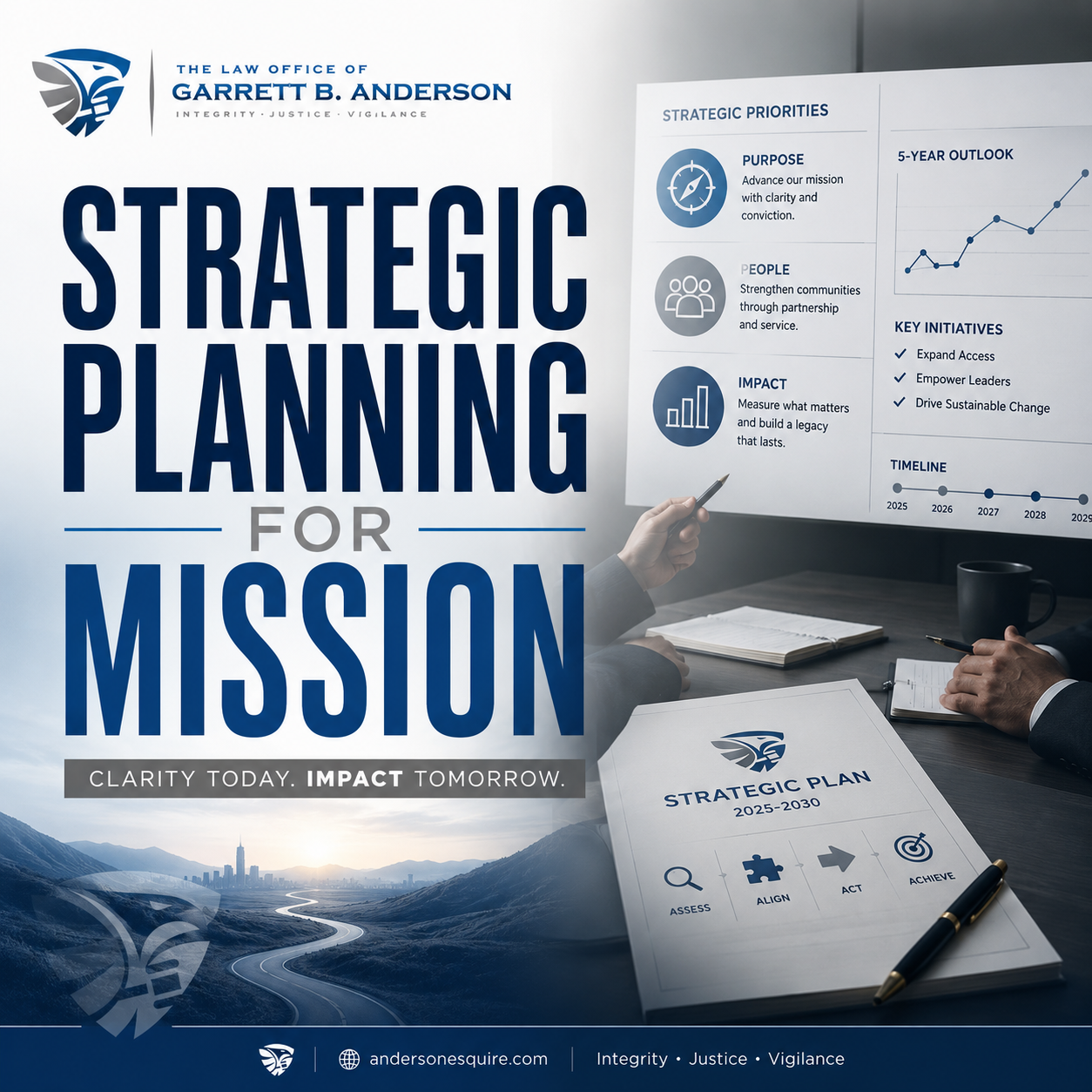
Strategic Planning for Mission-Driven Organizations
A strategic plan that lives in a binder is not a strategy. It is an artifact.
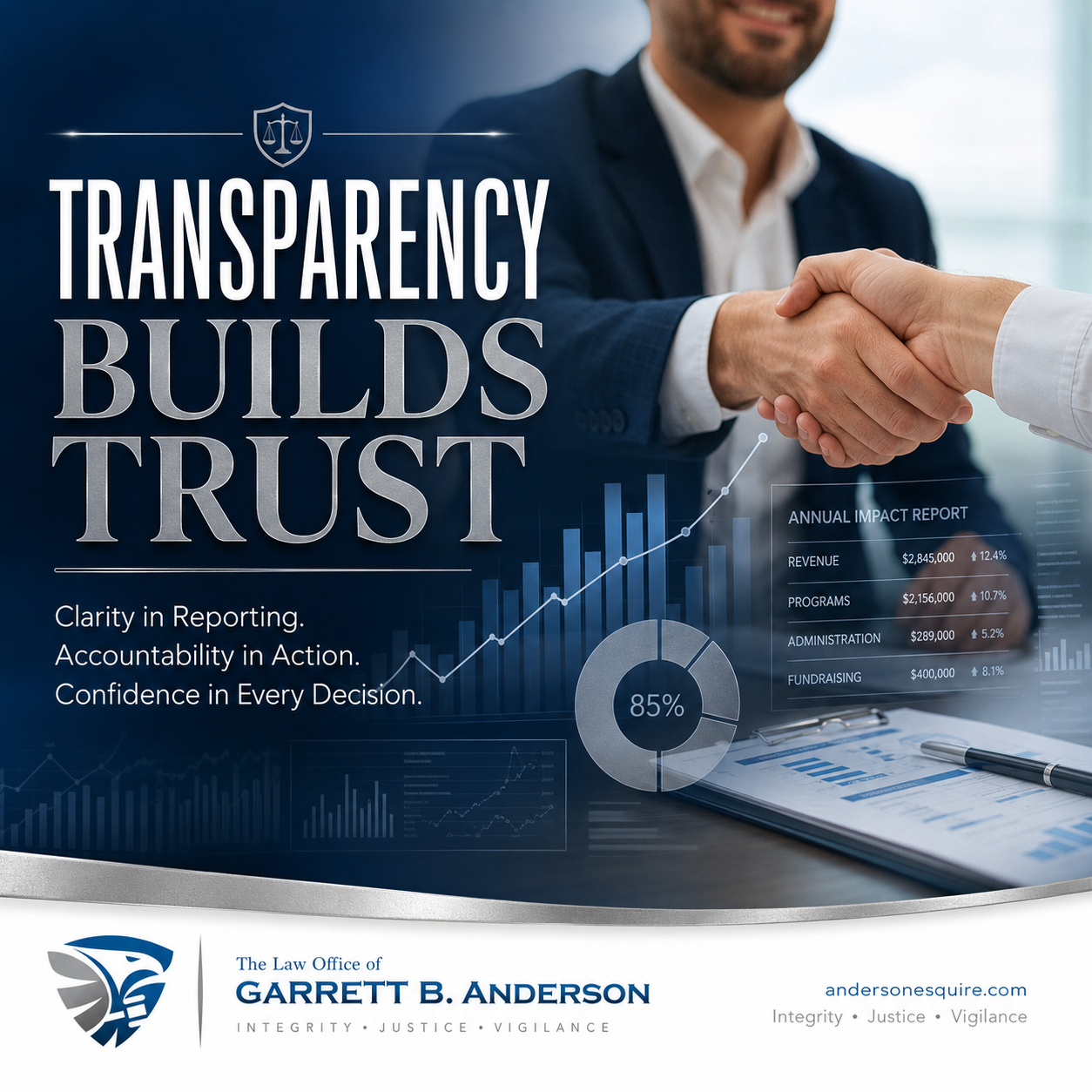
Financial Transparency and Donor Trust
In an era of declining institutional trust, financial transparency is not a reporting requirement. It is a competitive advantage.
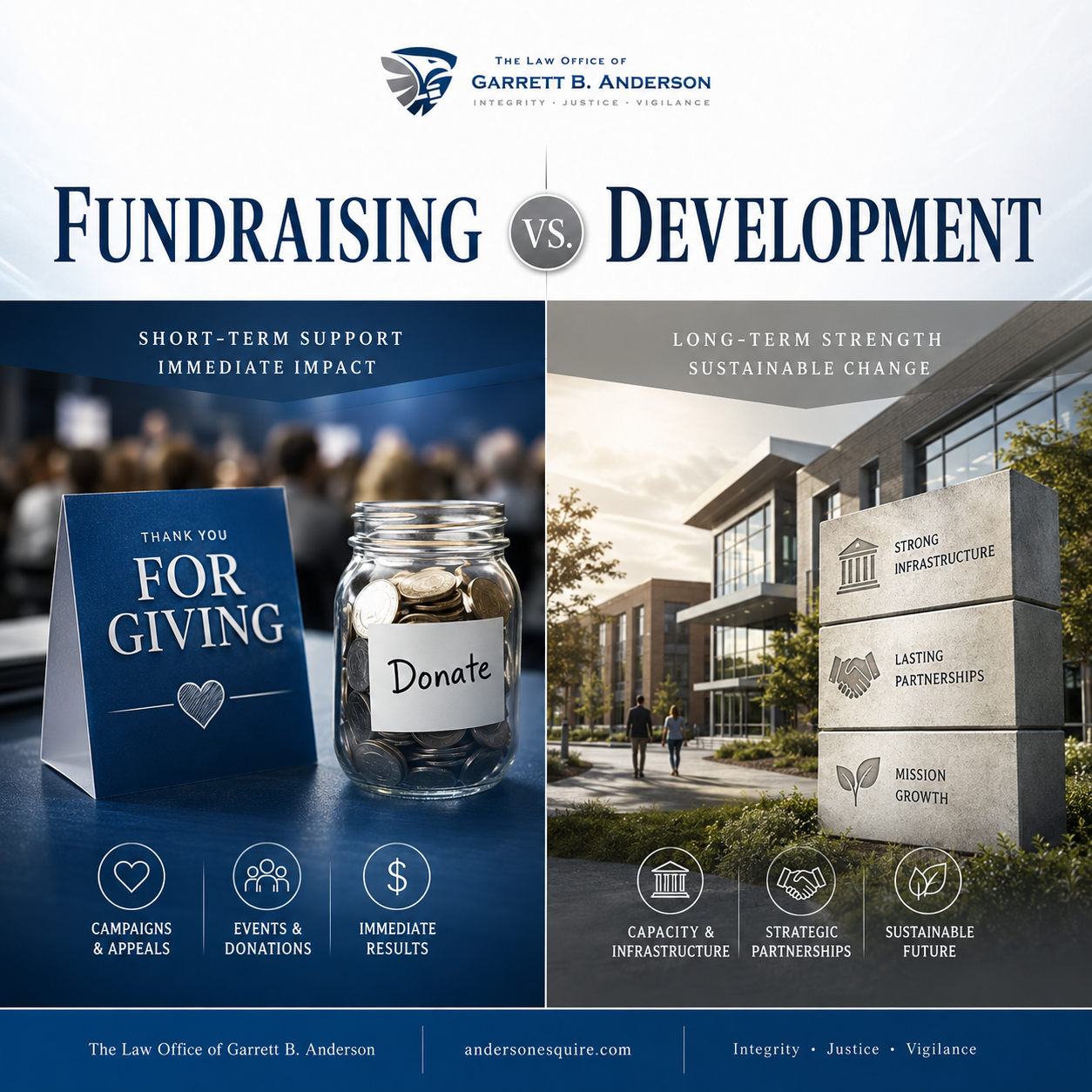
The Difference Between Fundraising and Institutional Development
One fills this year's gap. The other builds the organization that will not need to scramble next year.

How to Build a High-Functioning Nonprofit Board
Your board is either your organization's greatest asset or its most predictable liability. There is not much space between.
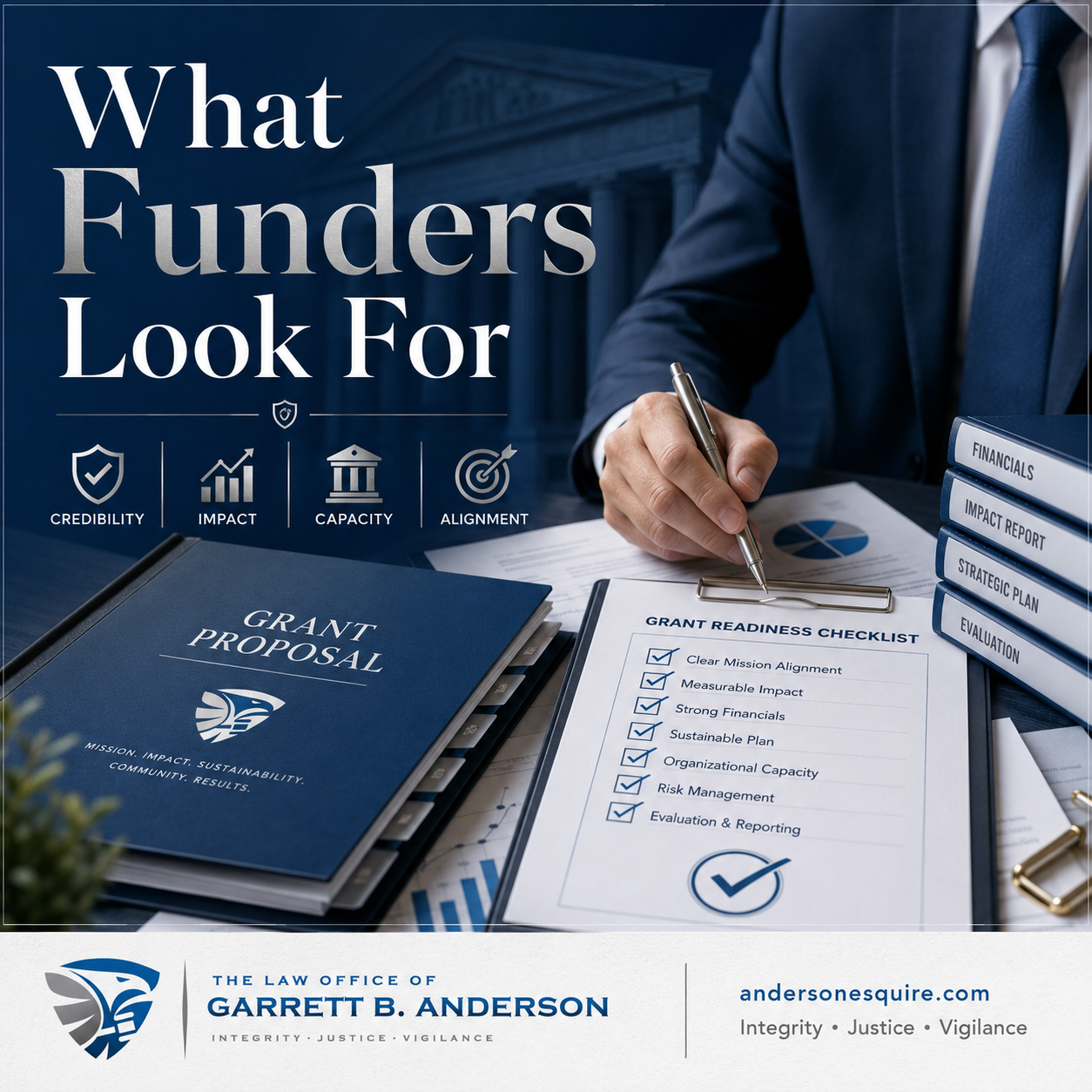
Grant Readiness: What Funders Actually Look For
The strongest proposal in the room loses to the organization that already looks like it knows how to steward resources.
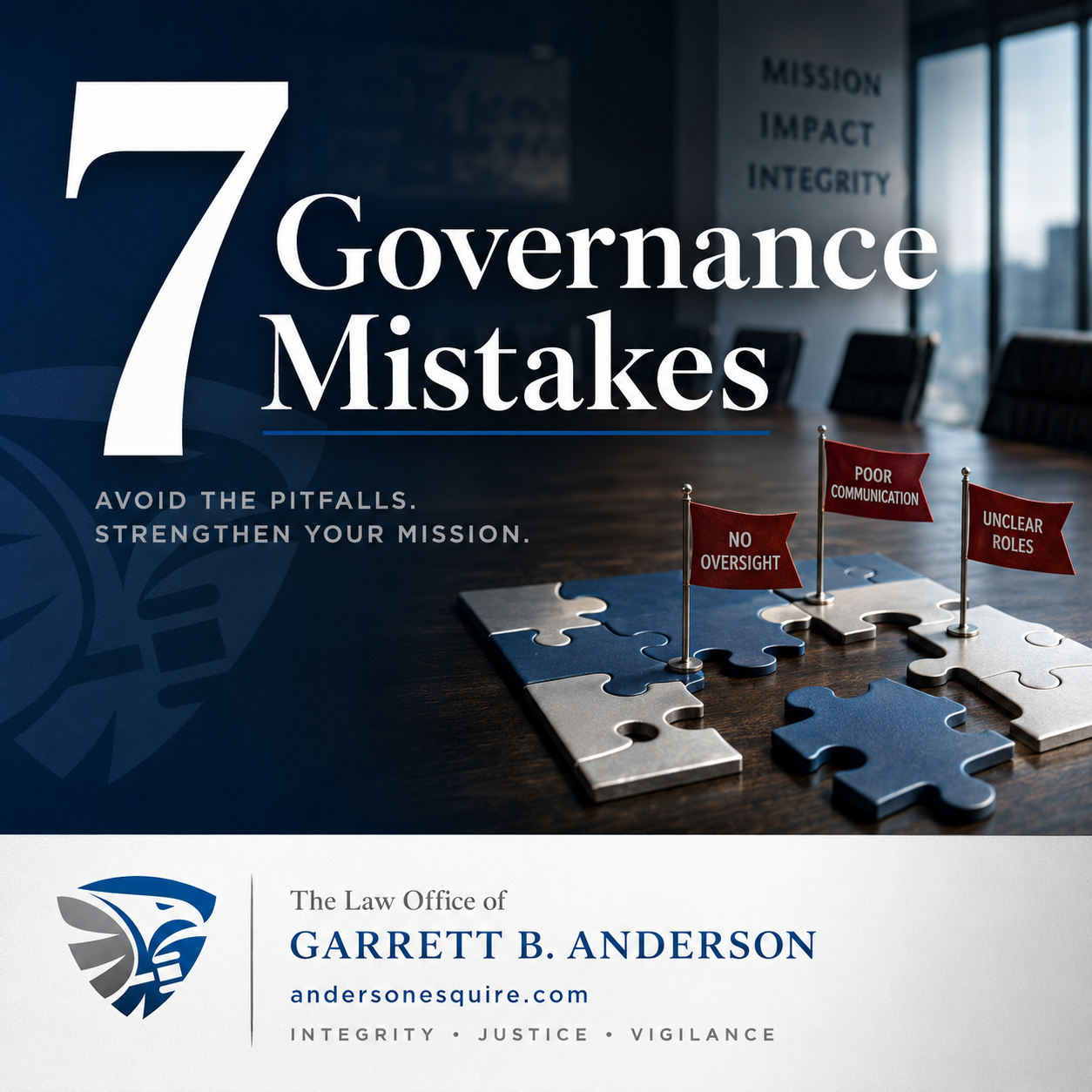
The Top 7 Governance Mistakes Nonprofits Make
Most organizational crises are not accidents. They are the predictable result of governance gaps left unaddressed.
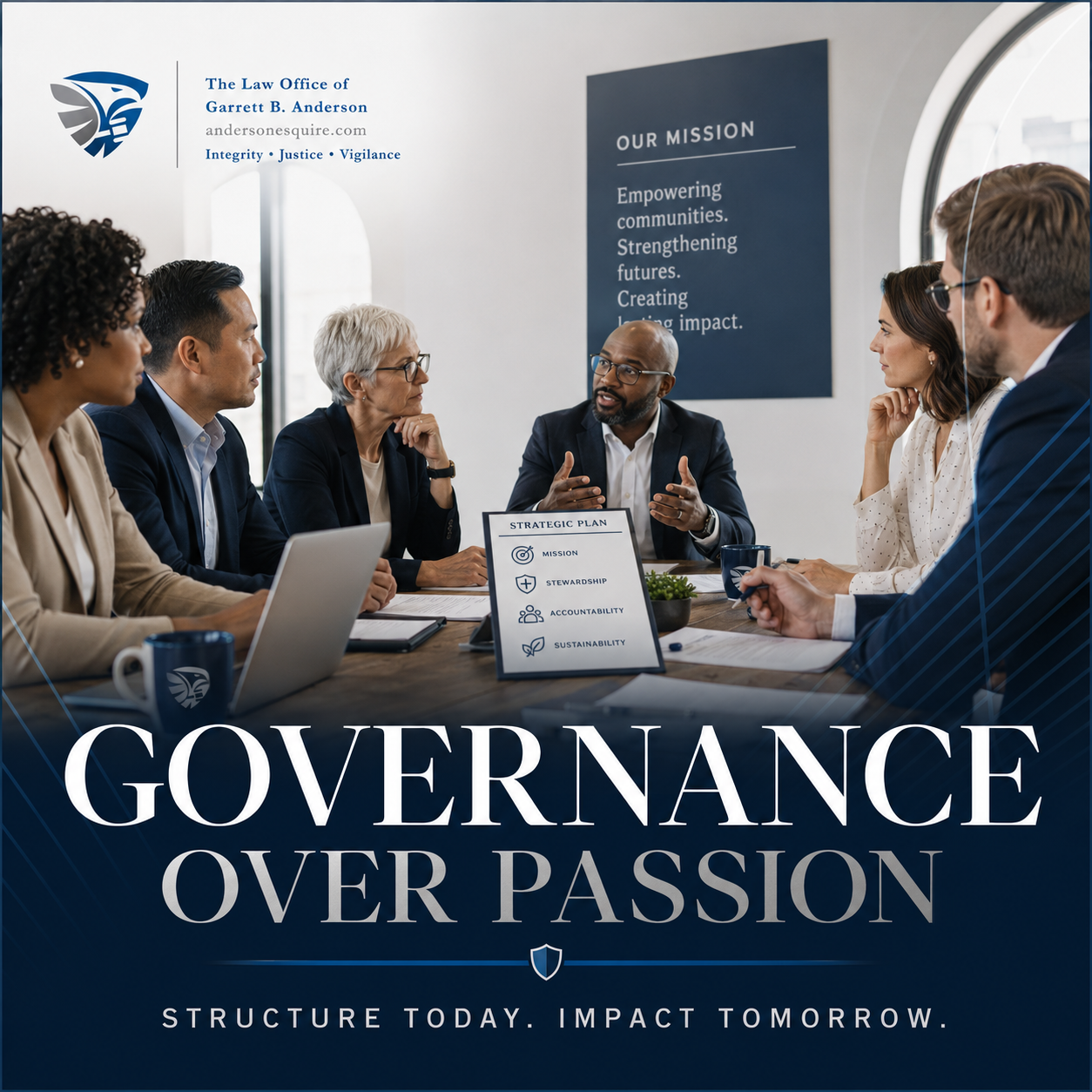
Why Strong Governance Matters More Than Passion Alone
Mission without structure is just good intentions waiting to collapse.