
Building Sustainable Revenue Beyond Donations
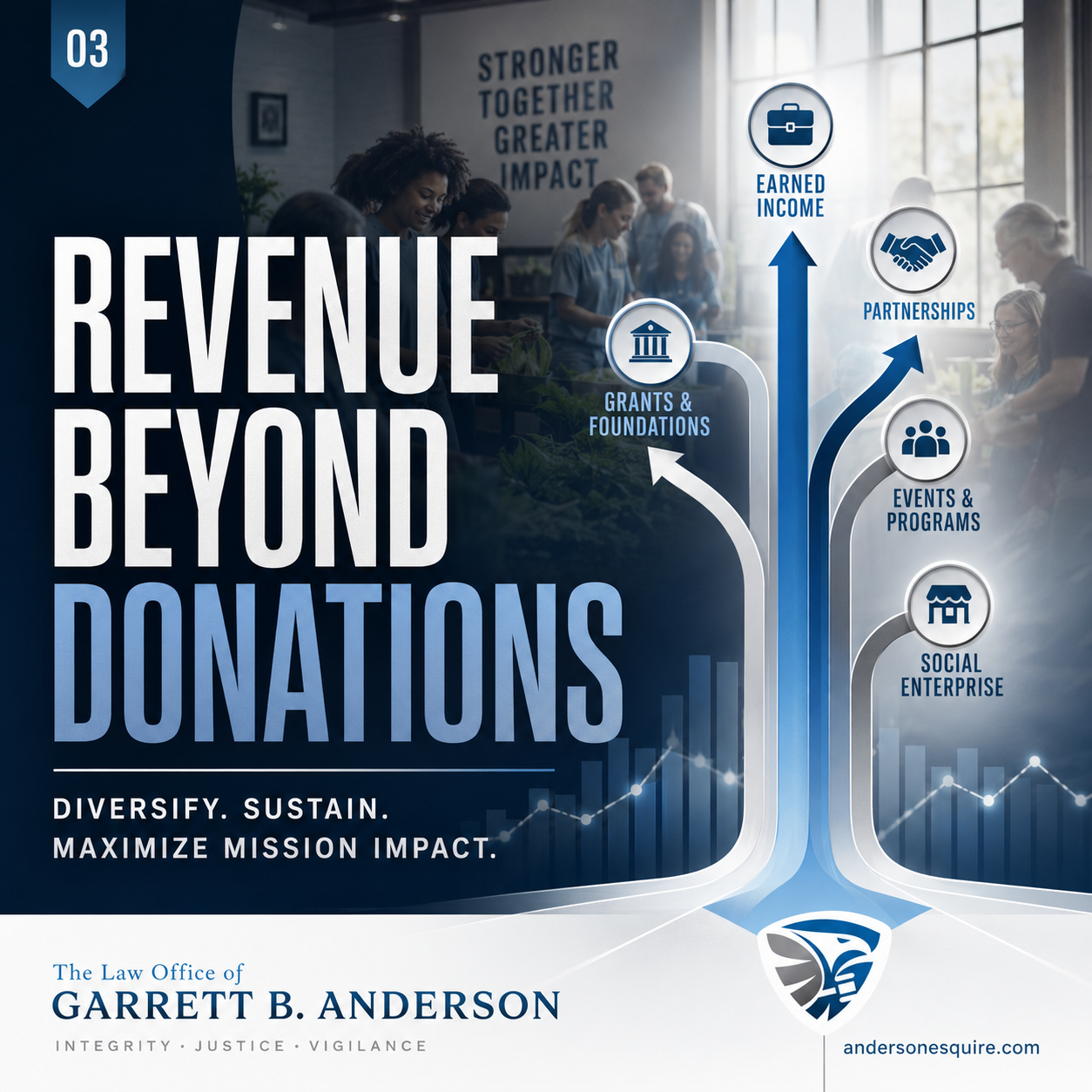
The Donation Dependency Problem
Individual donations and grant funding are the lifeblood of most nonprofit organizations. They are also, by nature, variable. Donor priorities shift. Grant cycles end. Economic downturns constrict philanthropic giving. Organizations built entirely on charitable contributions live in a permanent state of financial uncertainty, and that uncertainty has mission consequences.
The question is not whether nonprofits should pursue donations. They should, aggressively and strategically. The question is whether donations are the only leg the organization is standing on.
The Revenue Diversification Imperative
Revenue diversification is not a radical concept in the sector. It is increasingly a baseline expectation among sophisticated funders, who recognize that single-source dependency creates risk not just for the organization but for the communities it serves. A funder who provides 40% of your operating budget is not just a donor. They are a structural dependency, and they know it.
Building sustainable revenue means systematically developing multiple income streams that together provide operational stability and strategic flexibility.
Earned Revenue Models
Many nonprofits have programmatic assets that can generate earned revenue without compromising their tax-exempt purpose. Common models include:
Fee-for-service program delivery to government agencies or health systems
Facility rental and venue use agreements
Social enterprise subsidiaries tied to mission-aligned goods or services
Training and consulting services in areas of organizational expertise
Certification or credentialing programs in specialized fields
Each of these requires careful legal structuring, including UBIT analysis and, in some cases, separate entity formation. But the revenue diversification potential is substantial.
Endowment Development
An endowment is an investment portfolio whose principal is preserved while earnings support organizational operations or specific program areas. For most small nonprofits, an endowment feels aspirational. In practice, endowment campaigns can begin at virtually any organizational scale, with the right donor relationships and a compelling case for perpetual impact.
Endowment assets provide the ultimate organizational resilience: revenue that does not depend on next year's funder priorities.
Government Contracts and Public Funding
Government contracts for service delivery are distinct from grants and represent a significant revenue opportunity for nonprofits with established programmatic track records. HUD, SAMHSA, HHS, and state-level agencies regularly contract with community-based organizations for direct service delivery. These contracts are competitively sourced but offer multi-year, substantial revenue.
Practical Takeaways
Map your current revenue mix and identify the percentage from each source. If any single source exceeds 40%, prioritize diversification planning.
Identify one or two earned revenue opportunities that align with your existing programmatic capacity.
Consult with legal counsel before launching any fee-for-service program to ensure structural compliance.
Begin an endowment cultivation conversation with your top five donors.
Interested in strengthening your organization's governance, grant readiness, or operational capacity? Contact our office to learn more about nonprofit consulting and institutional development services.
