
Why Every Mission-Driven Organization Needs a Compliance Calendar
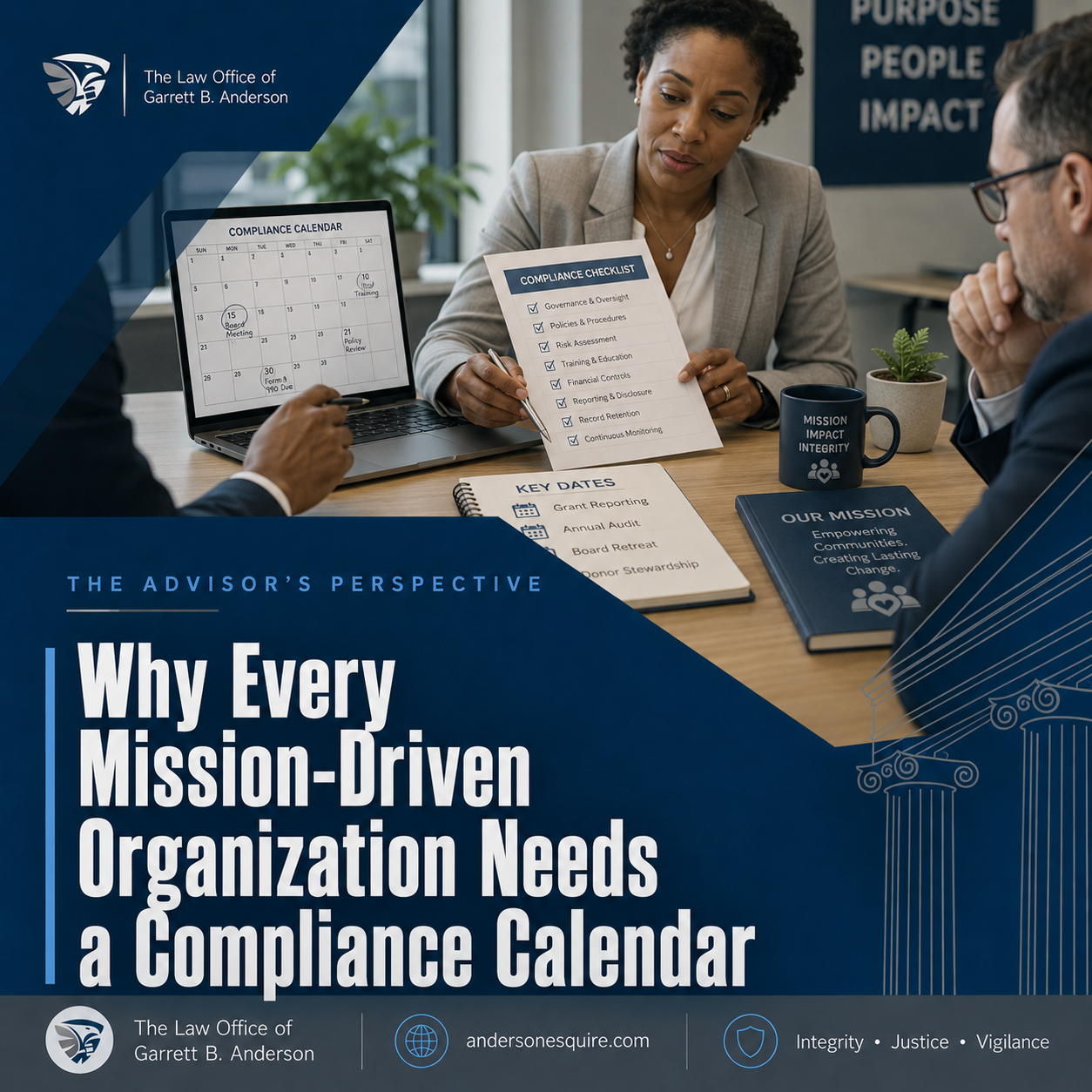
Nonprofits face a recurring set of legal obligations, including annual filings, policy reviews, registration renewals, and grant reporting deadlines, that rarely announce themselves with urgency until they are overdue. A missed deadline does not always create immediate crisis, but it can result in penalties, loss of tax-exempt status, or damaged funder relationships that take significant time and resources to repair.
A compliance calendar is a structured tool that maps an organization's legal and regulatory obligations to specific dates throughout the year. It typically includes federal and state filings such as Form 990 and state charitable registration renewals, grant reporting deadlines, board meeting and minutes requirements, policy review cycles, and any contractual reporting obligations to funders or partners.
For organizations operating in multiple states, the calendar becomes especially important. Charitable solicitation registration requirements vary significantly by jurisdiction, and the consequences for noncompliance can include fines and suspension of fundraising authority.
Building the calendar is a one-time investment that creates ongoing value. Once the organization knows its obligations and has a system for tracking them, compliance becomes a routine function rather than a recurring emergency. Staff and board leadership both benefit from knowing what is required and when. Legal counsel can play an important role in developing the initial calendar, identifying obligations the organization may not be tracking, and conducting annual reviews as the regulatory landscape evolves.
Practical Takeaways
• A compliance calendar maps legal, regulatory, and contractual deadlines so nothing falls through the cracks.
• Key items typically include Form 990 filings, state registrations, grant reports, and policy review cycles.
• Organizations operating in multiple states face additional charitable solicitation registration requirements.
• A well-maintained compliance calendar reduces reactive scrambling and demonstrates organizational maturity to funders.
• Legal counsel can help build the calendar, identify gaps, and keep it current as requirements change.
Organizations grow stronger when legal structure, governance, and strategy work together. The Law Office of Garrett B. Anderson assists mission-driven organizations, nonprofits, churches, and leaders with counsel designed to support sound decisions and sustainable growth.
If your organization needs help building or auditing its compliance calendar, we are glad to assist.
Disclaimer: This post is for informational purposes only and does not constitute legal advice. For guidance specific to your organization, consult qualified legal counsel.
