
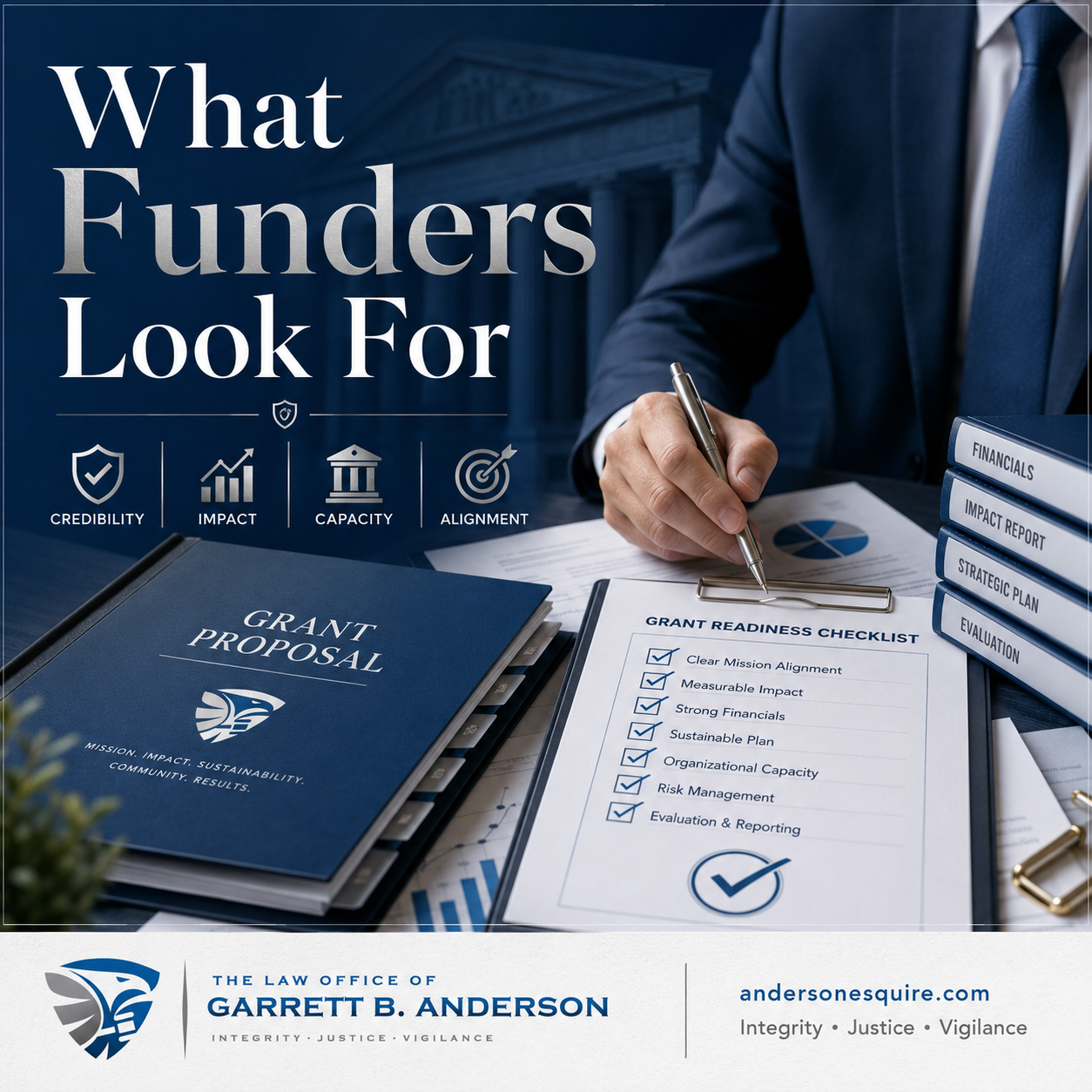
The Grant Readiness Gap
There is a persistent belief in the nonprofit sector that grant funding is primarily about the quality of the proposal narrative. Organizations spend weeks crafting compelling statements of need, drafting outcome frameworks, and refining logic models, only to receive a rejection that offers no explanation and requires no appeal.
What many organizations do not understand is that funders evaluate far more than the proposal. They evaluate the organization behind it.
What Grant Readiness Actually Means
Grant readiness refers to an organization's demonstrated capacity to receive, manage, report on, and account for grant funds in alignment with funder expectations and applicable law. It is institutional, not just administrative.
A grant-ready organization can produce the following without scrambling:
Current, signed bylaws and board resolution authority
An up-to-date IRS determination letter
Audited financial statements or reviewed financials (depending on budget size)
A current strategic plan or organizational work plan
Documented internal controls and financial policies
A conflict-of-interest policy signed by all board members
A list of current board members with terms and affiliations
What Funders Are Really Asking
Behind every document request is a question. The audited financials ask: can this organization manage money responsibly? The board list asks: is there adequate oversight? The strategic plan asks: does leadership know where they are going and how to get there?
Funders invest in organizations, not just programs. They want confidence that your structure can carry the weight of their investment.
Program Design Matters Too
Beyond institutional capacity, funders evaluate program quality: Is the proposed intervention evidence-informed? Are the target outcomes realistic and measurable? Does the budget reflect the actual cost of delivering the work? Is the evaluation plan credible?
Strong proposals fail when organizations cannot demonstrate that they have done this kind of work before, or have the infrastructure to do it now.
Practical Takeaways
Maintain a grant-readiness file that is updated quarterly, not assembled per application.
Know your current fiscal year financials at all times. Funders may ask for them in conversations, not just formally.
Align your program design to your organization's documented track record.
If you are applying to federal or government grants, ensure compliance with Uniform Guidance (2 CFR 200) before you submit.
The organizations that win grants consistently are not just good writers. They are institutionally prepared.
Interested in strengthening your organization's governance, grant readiness, or operational capacity? Contact our office to learn more about nonprofit consulting and institutional development services.
