
Board Governance Is Risk Management
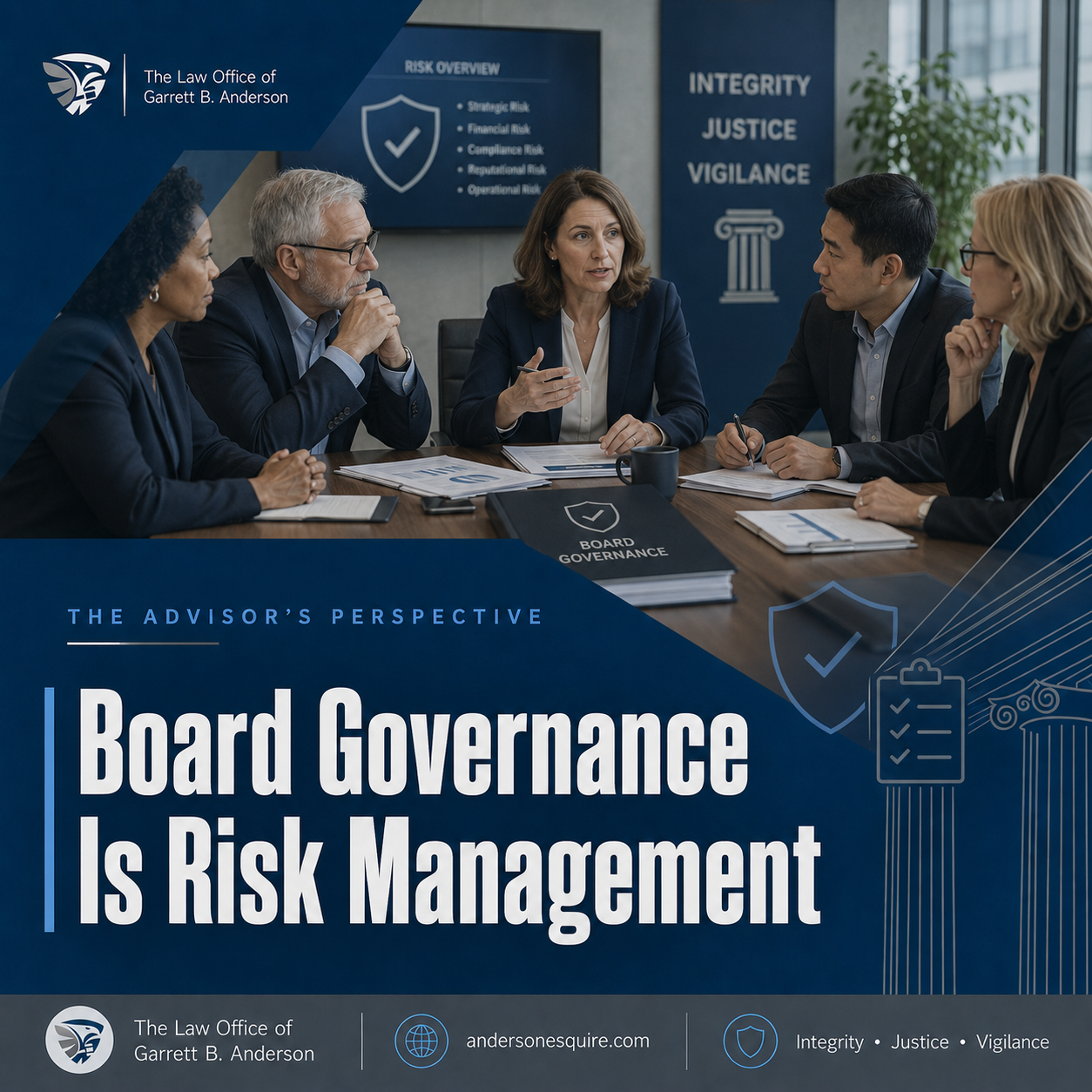
Boards are often understood in relational terms, as a group of committed volunteers who believe in the mission. That framing is not wrong, but it is incomplete. A nonprofit board is also a legal body with defined duties and real liability exposure. When boards fail to govern well, the consequences reach far beyond a difficult meeting.
Every nonprofit board member carries three core legal duties: the duty of care, the duty of loyalty, and the duty of obedience. The duty of care requires directors to make informed decisions, not simply show up and defer. The duty of loyalty requires that directors put the organization's interests ahead of their own. The duty of obedience requires faithfulness to the organization's mission and governing documents.
These duties are not ceremonial. They are the legal standard against which board conduct is measured if something goes wrong. Directors who rubber-stamp decisions without review, approve transactions involving their own interests without proper disclosure, or allow the organization to drift from its stated purpose are not just poor leaders. They may be legally exposed.
Risk management through governance means building systems that protect the organization before problems arise: conflict of interest policies, financial controls, documented decision-making, regular policy reviews, and clearly defined roles between the board and executive staff. Organizations with strong governance structures are better positioned in audits, more attractive to funders, and more resilient when disputes arise.
Practical Takeaways
• Board members carry legal duties of care, loyalty, and obedience that create real accountability.
• Governance failures, including undocumented decisions, unmanaged conflicts of interest, and policy gaps, create legal and reputational exposure.
• Risk management is not a separate function from governance. It is embedded in how boards operate.
• Funders, regulators, and courts look at governance quality when evaluating nonprofit credibility and compliance.
• Proactive governance investment, including policies, training, and documentation, costs far less than reactive crisis management.
Organizations grow stronger when legal structure, governance, and strategy work together. The Law Office of Garrett B. Anderson assists mission-driven organizations, nonprofits, churches, and leaders with counsel designed to support sound decisions and sustainable growth.
If your board is due for a governance review, we are available to assist.
Disclaimer: This post is for informational purposes only and does not constitute legal advice. For guidance specific to your organization, consult qualified legal counsel.
