
How Boards Should Handle Conflicts of Interest
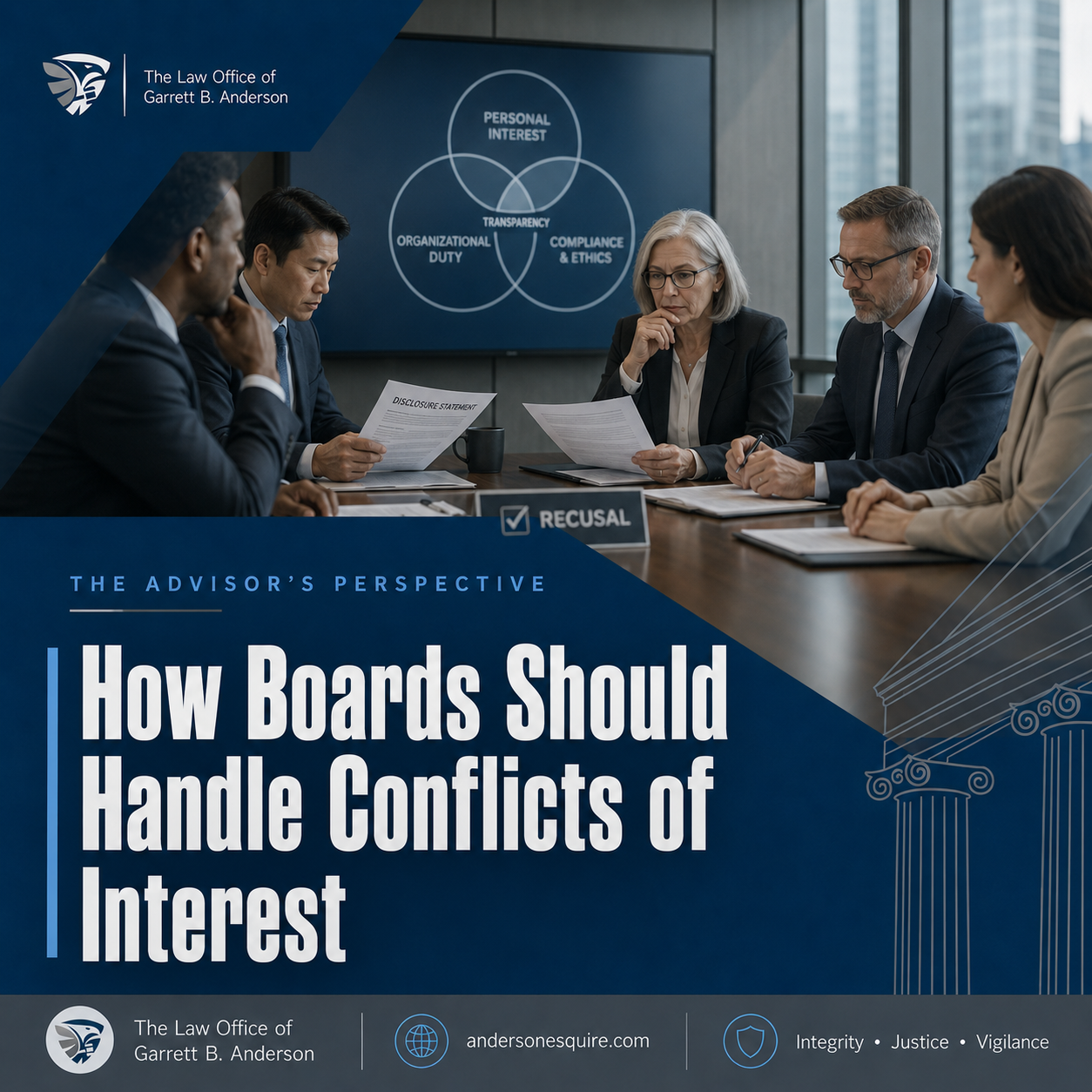
A conflict of interest does not automatically mean misconduct. In nonprofit governance, conflicts arise regularly, such as a board member whose employer might benefit from an organization contract, a director who serves on two boards with overlapping interests, or a founder with a personal stake in a particular program decision. The issue is not whether conflicts exist, but whether they are properly managed.
The IRS expects tax-exempt organizations to have a written conflict of interest policy and to enforce it. This is not merely bureaucratic compliance. Unmanaged conflicts of interest expose the organization to claims of private benefit or inurement, which can threaten tax-exempt status. They also create reputational risk, undermine board trust, and in some cases give rise to litigation.
A sound conflict of interest policy requires annual disclosure from all board members, a process for identifying and evaluating potential conflicts before decisions are made, recusal procedures for interested directors, and documentation of how conflicts were managed in board minutes.
The recusal process matters as much as the policy itself. A director with a conflict should not participate in the deliberation or vote on the relevant matter. Simply disclosing the conflict and remaining in the room is insufficient. The organization's minutes should reflect what was disclosed, who recused, and how the decision was reached by disinterested directors.
Practical Takeaways
• Conflicts of interest are common in nonprofit governance; the obligation is to manage them properly, not pretend they do not exist.
• The IRS expects a written conflict of interest policy as part of responsible governance of tax-exempt organizations.
• Disclosure alone is not enough: interested directors should recuse from deliberation and the vote.
• Board minutes should document how conflicts were identified, disclosed, and managed.
• Annual disclosure statements from all board members are a governance best practice and an IRS expectation.
Organizations grow stronger when legal structure, governance, and strategy work together. The Law Office of Garrett B. Anderson assists mission-driven organizations, nonprofits, churches, and leaders with counsel designed to support sound decisions and sustainable growth.
If your board needs a conflict of interest policy review or governance training, we welcome the conversation.
Disclaimer: This post is for informational purposes only and does not constitute legal advice. For guidance specific to your organization, consult qualified legal counsel.
