
How Faith-Based Organizations Can Compete for Grant Funding
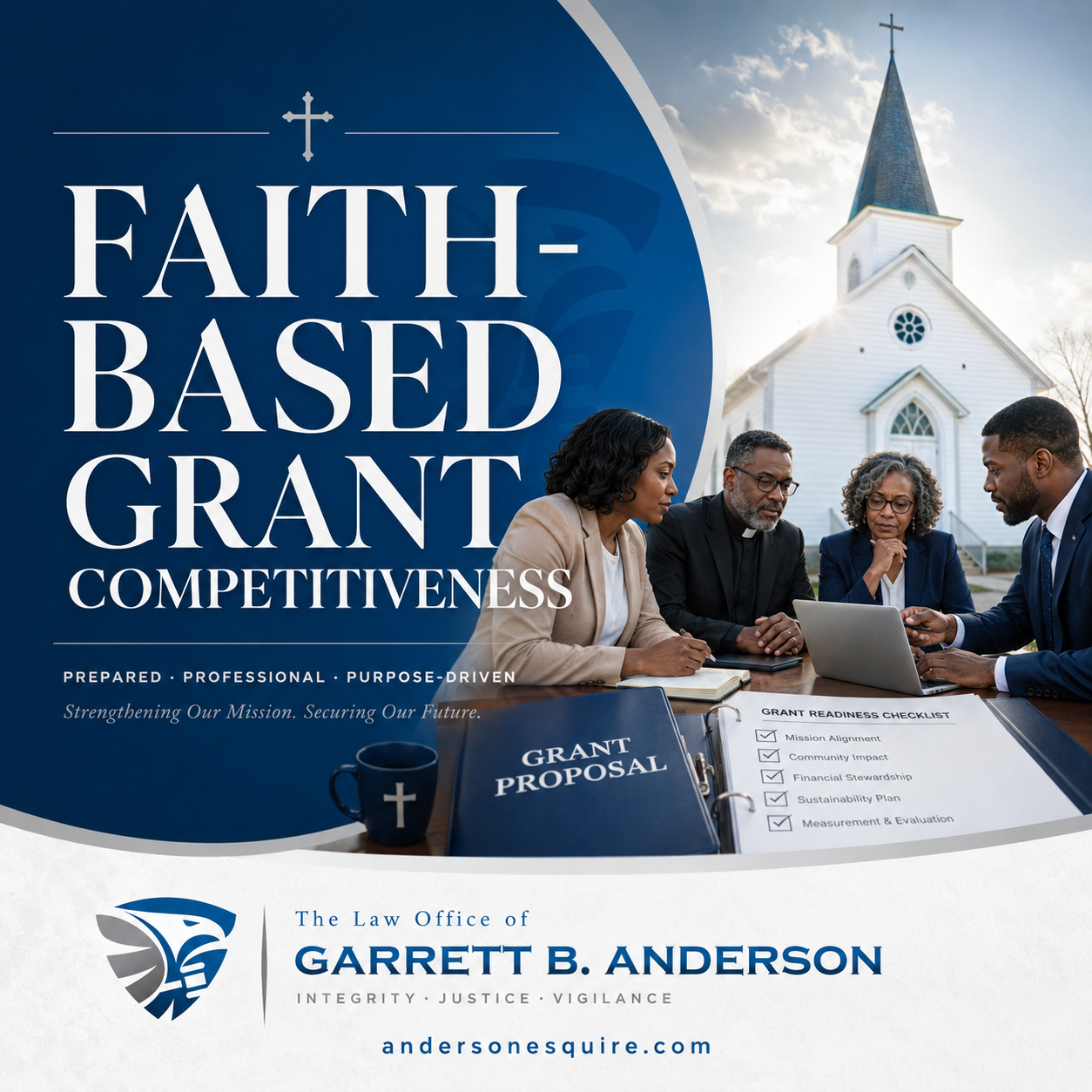
A Persistent Misconception
Faith-based organizations frequently underestimate their competitiveness in the grant-funding landscape, or overcorrect by obscuring their religious identity in ways that weaken their community credibility. Neither approach serves them well.
The truth is that faith-based nonprofits have structural advantages in community trust, volunteer mobilization, physical infrastructure, and cross-sector relationships that secular organizations often lack. The disadvantage, where one exists, is almost always organizational rather than theological.
What Funders Can and Cannot Consider
Federal and most government grant programs cannot favor or disfavor applicants on the basis of religious identity. Under current constitutional and regulatory frameworks, faith-based organizations that can demonstrate programmatic competency, organizational capacity, and non-discriminatory service delivery are generally eligible for government funding on the same basis as their secular counterparts.
Private foundations vary. Some have explicit secular mandates. Others specifically target faith-based institutions. Most evaluate capacity, not creed.
The Real Barriers
Where faith-based organizations consistently struggle in the grant market is at the institutional readiness level. Specifically:
Governance structures that blend ecclesiastical authority with nonprofit board authority in ways that create confusion or conflict-of-interest exposure
Financial systems that commingle religious programming and charitable program expenses
Limited track record of formal program evaluation or outcome documentation
Bylaws that do not reflect current organizational structure or that include denominational language that raises questions for secular funders
Separating Church Operations from Nonprofit Programming
Many faith-based nonprofits operate as integrated auxiliaries of a religious body, or as separate 501(c)(3) organizations with close ties to a congregation. Both structures can work. What matters is that the lines between religious activity and charitable programming are clearly documented, that restricted grant funds are managed separately from general congregational funds, and that the nonprofit entity has independent governance capable of satisfying funder accountability requirements.
Building a Competitive Funding Profile
Faith-based organizations that have built strong funding profiles share common characteristics: a professional development function (either staff or consulting), clear program design with documented outcomes, a board that includes non-congregational members with relevant expertise, and a track record of managing prior grants responsibly.
Practical Takeaways
Review your organizational structure to ensure the 501(c)(3) entity has clear operational independence from the religious body.
Develop a program outcome framework that documents what your community programs accomplish, in measurable terms.
Identify foundations that specifically fund faith-based community organizations.
If your board is entirely composed of congregational members, consider adding at-large community members with complementary expertise.
Interested in strengthening your organization's governance, grant readiness, or operational capacity? Contact our office to learn more about nonprofit consulting and institutional development services.
