
The Legal Difference Between Advice, Strategy, and Management
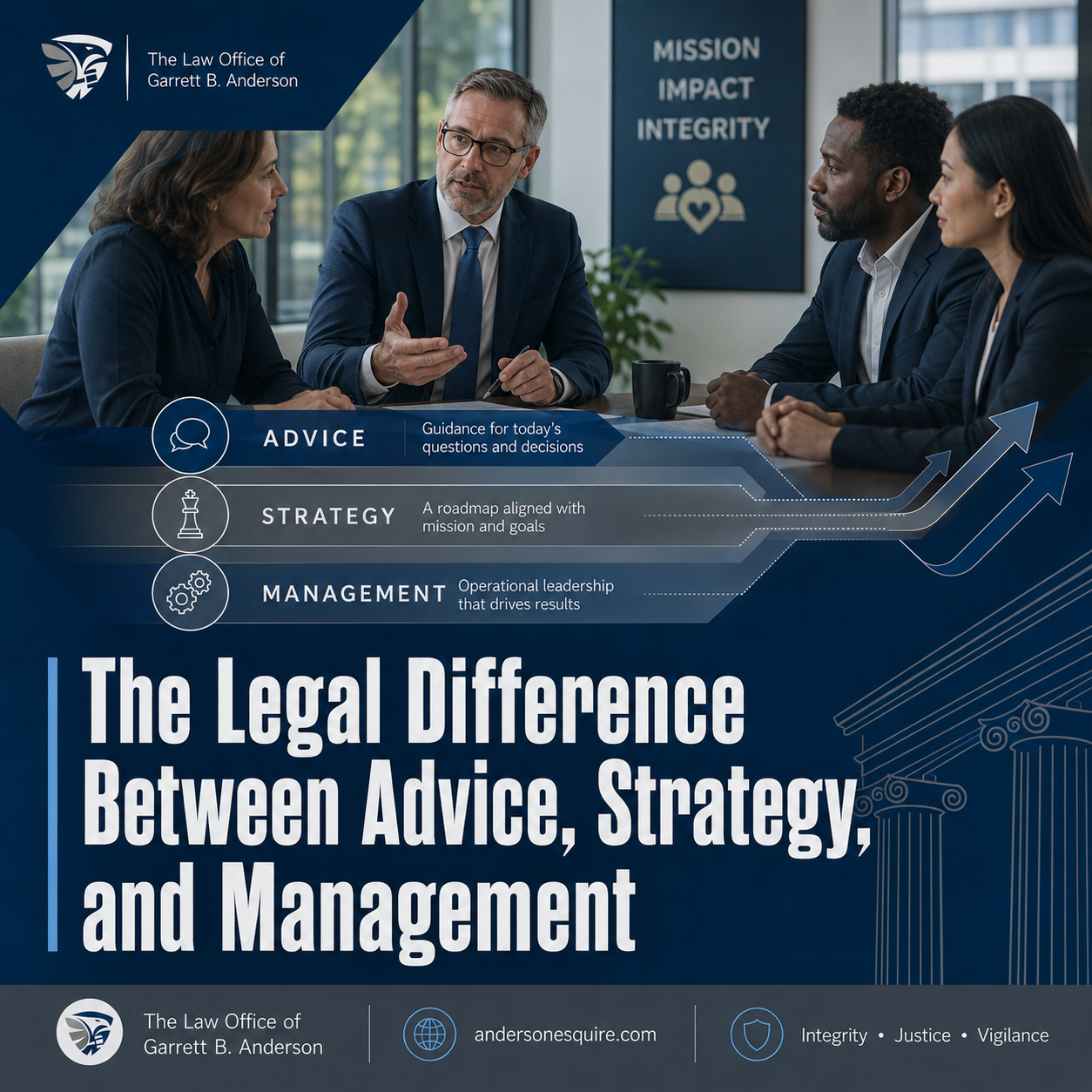
Nonprofit leaders sometimes blend legal counsel, strategic consulting, and organizational management into a single, undefined expectation. The result is confusion about what an attorney can and should do, and what the organization still needs to supply for itself. Clarity on these distinctions leads to better decisions and better use of resources.
Legal advice is counsel grounded in law. It answers questions like: Does this contract create liability? Does this policy comply with applicable regulations? What are our obligations under this grant agreement? Legal advice requires a licensed attorney and carries with it a duty of confidentiality and professional responsibility. It is the core of any legal engagement.
Strategic counsel is different. It applies legal knowledge to organizational decision-making, helping a board evaluate the risks and tradeoffs of a particular course of action, structure a partnership agreement to protect the organization's interests, or think through the legal implications of a new program or growth initiative. It is forward-looking, contextual, and often interdisciplinary.
Management is neither of these things. It involves running the organization's day-to-day operations, implementing decisions, supervising staff, and executing programs. Attorneys are not organizational managers, and boards should not expect counsel to fill operational gaps. When those lines blur, the attorney-client relationship can become confused, and the organization loses the clarity it needs from both its legal and operational leadership.
Practical Takeaways
• Legal advice is attorney-client counsel grounded in law, regulation, and professional responsibility.
• Strategic counsel applies legal analysis to organizational decision-making and risk evaluation.
• Management is an operational function that falls to staff and leadership, not outside counsel.
• Blurring these roles creates confusion, inefficiency, and sometimes liability.
• Clarifying the scope of any legal engagement protects both the organization and the attorney-client relationship.
Organizations grow stronger when legal structure, governance, and strategy work together. The Law Office of Garrett B. Anderson assists mission-driven organizations, nonprofits, churches, and leaders with counsel designed to support sound decisions and sustainable growth.
We welcome conversations with leaders who want to think clearly about the kind of legal support their organization actually needs.
Disclaimer: This post is for informational purposes only and does not constitute legal advice. For guidance specific to your organization, consult qualified legal counsel.
