
The Difference Between Fundraising and Institutional Development
A Distinction That Changes Everything
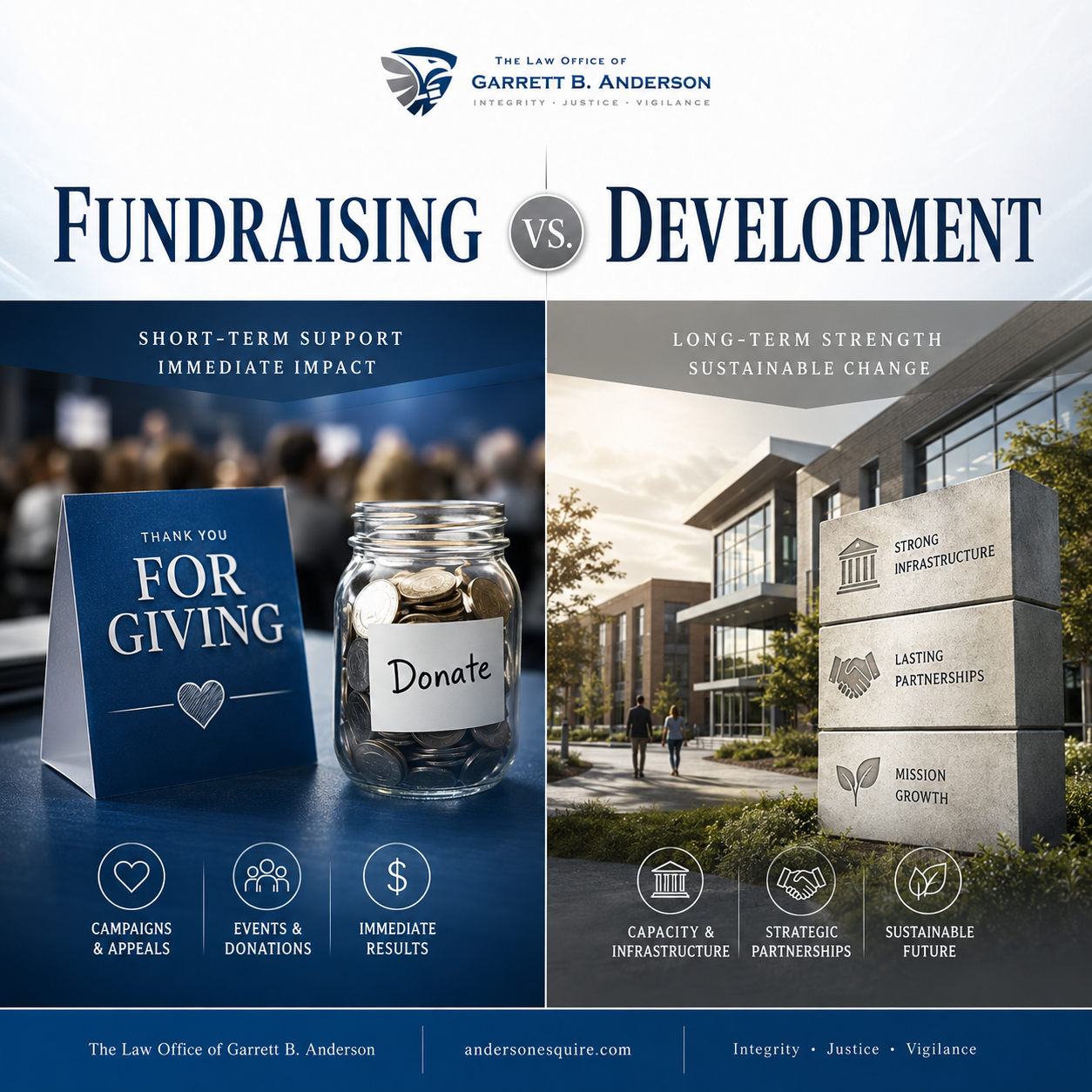
Most nonprofit leaders think about fundraising when they think about revenue. They plan events, cultivate donors, write appeals, and pursue grants. These activities matter. But organizations that confuse fundraising with institutional development remain perpetually reactive, always raising, rarely building.
Institutional development is a longer, more deliberate discipline. Understanding the difference is the first step toward sustainable organizational growth.
What Fundraising Is
Fundraising is the set of activities designed to generate revenue for organizational operations and programs. It includes individual donor cultivation, annual giving campaigns, special events, grant applications, and direct mail or digital appeals. Fundraising is essential, and it requires skill, strategy, and consistent execution.
The limitation of fundraising as a frame is that it focuses primarily on the transaction: the gift, the grant, the event revenue. It answers the question, "How do we raise what we need this year?"
What Institutional Development Is
Institutional development is the strategic process of building the organizational infrastructure, relationships, reputation, and financial systems that support long-term mission delivery. It encompasses fundraising, but it also includes board development, leadership succession, policy infrastructure, brand equity, major gift cultivation, endowment strategy, and earned revenue planning.
Institutional development asks: "What does this organization need to look like in five years, and what must we build now to get there?"
Why the Distinction Matters
Organizations that operate in pure fundraising mode are always one bad year away from crisis. A key donor moves away. A major grant is not renewed. A pandemic cancels the annual gala. Without institutional infrastructure, including diversified revenue, reserves, and strong relationships with multiple funders, the organization is exposed.
Institutional development creates resilience. It builds the kind of organizational credibility that attracts unsolicited gifts, multi-year commitments, and leadership donors who see the organization as a vehicle for lasting change.
Transitioning from Fundraising Mode
The transition from fundraising dependency to institutional strength is not overnight. It requires leadership alignment around a longer time horizon, investment in development staff or consulting capacity, and board members who understand that their role includes opening doors, not just writing checks.
Practical Takeaways
Create a three to five year development plan, not just an annual fundraising calendar.
Identify your top ten institutional relationships and build a cultivation strategy for each.
Invest in reserves. Even a modest operating reserve fundamentally changes how your organization makes decisions.
Evaluate your revenue mix: if more than 70% comes from a single source, that is a structural vulnerability.
Interested in strengthening your organization's governance, grant readiness, or operational capacity? Contact our office to learn more about nonprofit consulting and institutional development services.
