
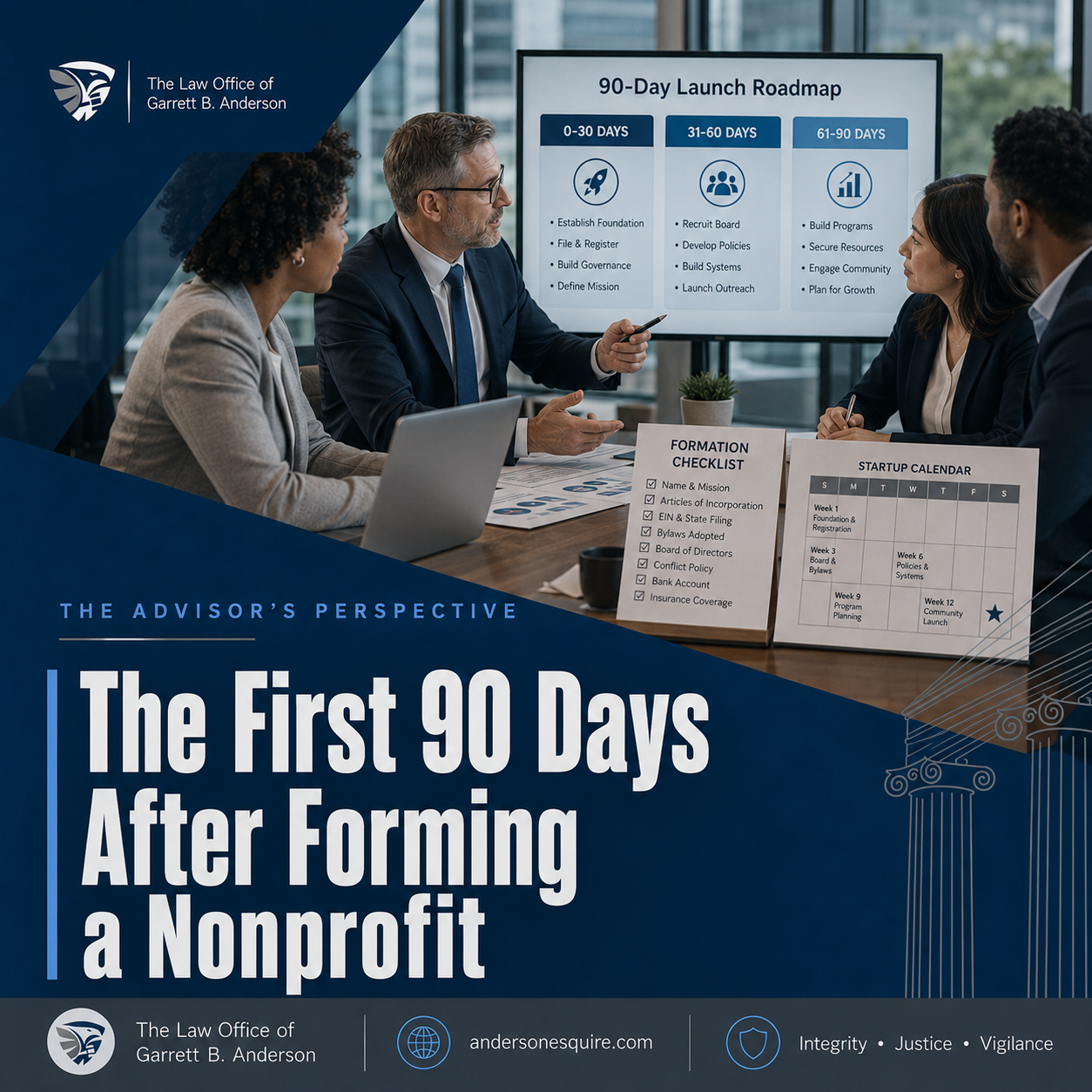
Incorporating a nonprofit and receiving tax-exempt status is a significant accomplishment. What happens in the weeks and months that follow matters just as much. The first 90 days are when the organization's operational habits, governance practices, and compliance infrastructure get established, for better or worse.
After formation, the first priority is completing any remaining federal and state filings. For most organizations, this means obtaining an Employer Identification Number from the IRS, filing for 501(c)(3) status if not already done, and registering for charitable solicitation in the states where the organization will fundraise. These are legal requirements, not optional steps.
The board should hold its first formal meeting with proper notice, adopt bylaws, elect officers, and begin generating minutes. These early records matter. They establish that the organization is operating as a legally distinct entity and that the board is exercising its governance responsibilities. Organizations that skip formal meetings in the early months often find it difficult to reconstruct their governance history when auditors or funders ask for documentation.
Financial systems deserve early attention as well. A separate bank account in the organization's name, a basic bookkeeping system, and documented financial controls are foundational. Organizations that commingle funds or operate without basic financial structure create legal and tax problems that can be difficult to untangle later.
Practical Takeaways
• Complete all required federal and state filings promptly after formation, including EIN registration, tax-exempt application, and charitable solicitation registration.
• Hold a formal initial board meeting, adopt bylaws, elect officers, and maintain proper minutes from the start.
• Open a separate organizational bank account and establish basic financial controls immediately.
• Document early decisions in writing; the governance record you build now will matter later.
• Consider engaging legal counsel for a post-formation review to ensure the organization is structured and operating correctly.
Organizations grow stronger when legal structure, governance, and strategy work together. The Law Office of Garrett B. Anderson assists mission-driven organizations, nonprofits, churches, and leaders with counsel designed to support sound decisions and sustainable growth.
If your organization was recently formed and you want to make sure the foundation is solid, we are glad to help.
Disclaimer: This post is for informational purposes only and does not constitute legal advice. For guidance specific to your organization, consult qualified legal counsel.
