
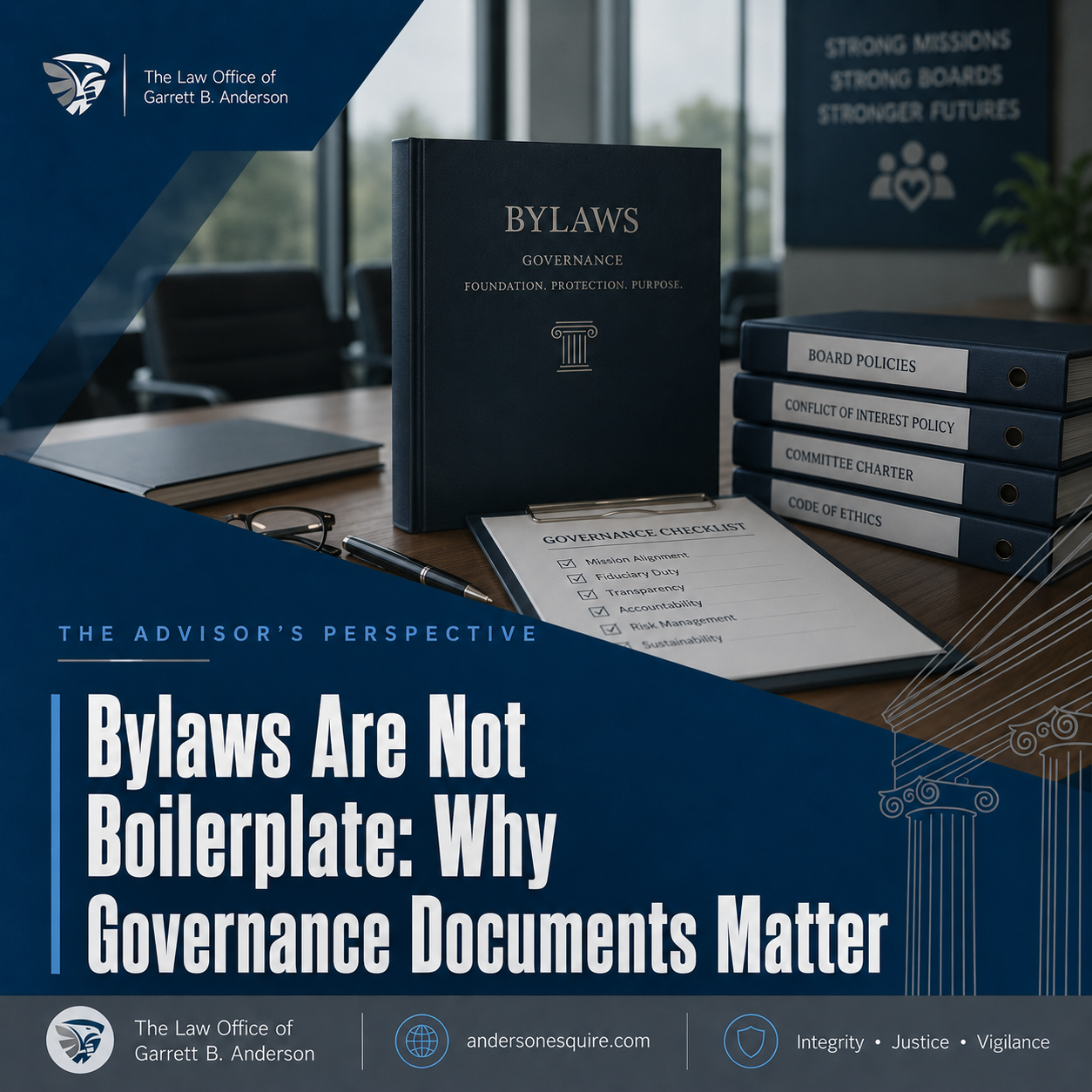
When nonprofits are formed, bylaws are often treated as something to complete and file, a procedural box to check on the way to tax-exempt status. That framing understates what bylaws actually are. They are the governing rules that determine how the organization makes decisions, how board members are selected and removed, how conflicts are resolved, and what happens when things go wrong.
Bylaws that were copied from a template or drafted without attention to the organization's actual structure often create problems later. Common issues include ambiguous quorum requirements that create confusion about whether meetings are valid, unclear authority over financial decisions, undefined term limits that allow the same individuals to hold power indefinitely, and vague removal procedures that make it difficult to address problematic board conduct.
These gaps do not matter during smooth operations. They surface exactly when the organization is already under stress, during a leadership dispute, a funding crisis, or a governance challenge. At that point, poorly drafted bylaws become a liability rather than a resource.
Bylaws should be tailored to the organization's actual governance structure, reviewed by counsel, approved properly by the founding board, and revisited periodically as the organization evolves. They should address board composition, officer roles, meeting requirements, quorum, voting thresholds, amendment procedures, and conflict of interest provisions at minimum. Organizations that invest in well-drafted governing documents early protect themselves from costly governance disputes later.
Practical Takeaways
• Bylaws are the organization's governing rules and shape every significant decision the board makes.
• Template bylaws often create ambiguities around quorum, removal procedures, and financial authority that become problems under pressure.
• Bylaws should be tailored to the organization's actual structure, not copied from a generic source.
• Core provisions include board composition, officer roles, meeting requirements, quorum, voting, amendment procedures, and conflict of interest policies.
• Bylaws should be reviewed and updated periodically as the organization grows and its governance needs evolve.
Organizations grow stronger when legal structure, governance, and strategy work together. The Law Office of Garrett B. Anderson assists mission-driven organizations, nonprofits, churches, and leaders with counsel designed to support sound decisions and sustainable growth.
If your organization's bylaws have not been reviewed recently, or were never drafted with care, we are available to assist.
Disclaimer: This post is for informational purposes only and does not constitute legal advice. For guidance specific to your organization, consult qualified legal counsel.
