
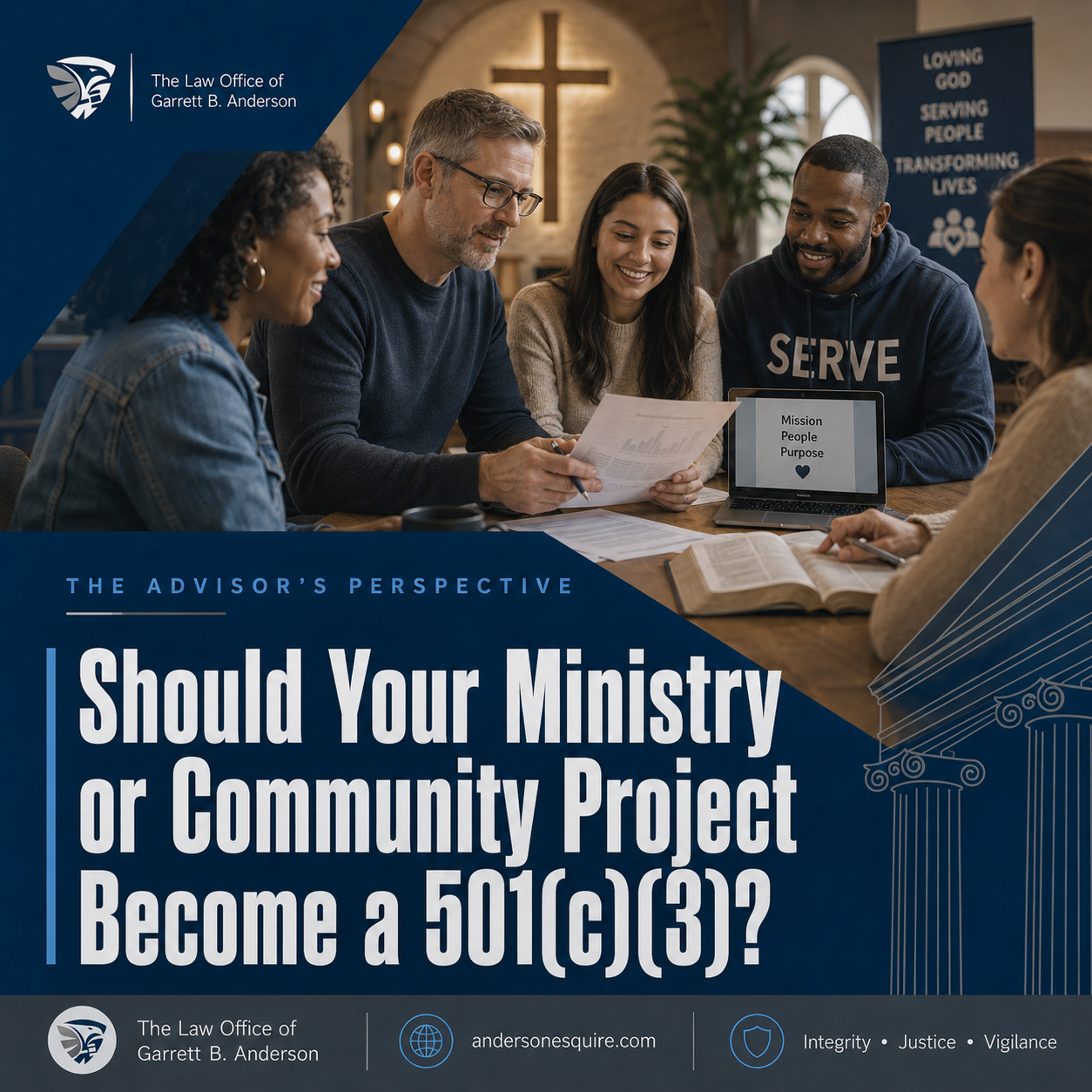
Many ministries and community projects begin informally, driven by a clear calling and a willing community of support. At some point, the question arises: should this become a formal nonprofit? The answer is not automatic. 501(c)(3) status carries significant benefits, but it also comes with legal and operational obligations that not every organization is ready to take on.
The primary benefit of 501(c)(3) status is tax exemption at the federal level, which means the organization generally does not pay income tax on funds received in furtherance of its exempt purpose. Equally important for many organizations, donors who contribute to a 501(c)(3) may deduct their gifts for federal income tax purposes, which can meaningfully support fundraising efforts.
Formal incorporation also provides a legal structure that distinguishes the organization from its founders, limits personal liability, enables the organization to enter contracts in its own name, and creates a governance framework through a board of directors. For organizations that intend to grow, hire staff, or receive grant funding, that structure is usually essential.
The obligations are equally real. A 501(c)(3) must file an annual return with the IRS (Form 990), comply with state registration requirements, maintain proper governance records, observe restrictions on political activity, and operate consistently with its stated exempt purpose. Leaders who incorporate without understanding these requirements often find themselves out of compliance before they realize it. Formal status is right for many organizations. It is not the right choice for every ministry project, and the timing matters as much as the decision itself.
Practical Takeaways
• 501(c)(3) status provides tax exemption and enables tax-deductible giving, both of which support organizational growth.
• Formal incorporation limits personal liability and creates legal infrastructure needed for contracts, grants, and employment.
• The obligations include annual IRS filings, state registrations, governance records, and restrictions on political activity.
• Timing matters: organizations that incorporate before they have leadership, governance, and a clear mission often struggle with early compliance.
• A consultation with legal counsel before incorporating can help leaders understand what they are taking on and structure the entity well from the start.
Organizations grow stronger when legal structure, governance, and strategy work together. The Law Office of Garrett B. Anderson assists mission-driven organizations, nonprofits, churches, and leaders with counsel designed to support sound decisions and sustainable growth.
If you are considering whether to formalize your ministry or community project, we welcome the opportunity to help you think it through.
Disclaimer: This post is for informational purposes only and does not constitute legal advice. For guidance specific to your organization, consult qualified legal counsel.
